

The story of Garry Kasparov
of reading
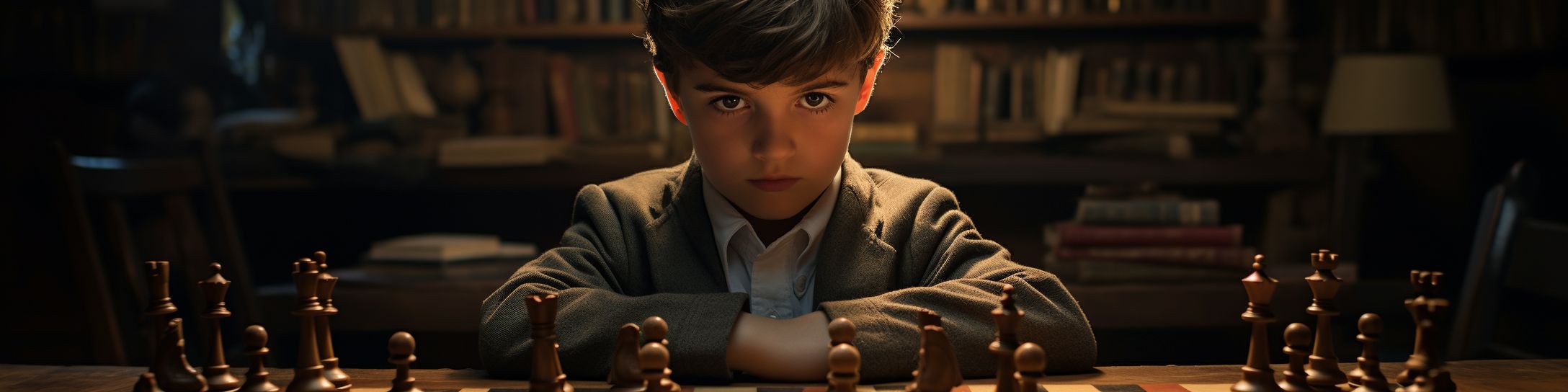
Youth and initiation to chess
Garry Kasparov was born on April 13, 1963, in Baku, Soviet Azerbaijan. From his childhood, he developed a keen interest in chess. His mother, Klara Shagenovna Kasparova, greatly encouraged and supported this early interest.
During his first chess lessons
History often tells us that Kasparov learned to play chess at the age of five by watching a match between his parents. He immediately showed a natural aptitude for the activity, so much so that at the age of seven, he began receiving professional lessons.
A young chess prodigy
Over the years, young Garry honed his skills and quickly became a chess prodigy. At the age of twelve, he won the Soviet Junior Championship. This display of burgeoning youth foreshadowed the exceptional feats Kasparov would later demonstrate to the world.
Mikhail Botvinnik's Chess School
At the age of ten, Garry Kasparov was selected to study at the Mikhail Botvinnik Chess School in Moscow, a prestigious institution dedicated to training promising chess players. There, he had the opportunity to learn from grandmasters of the game and further refine his talent.
The path to greatness
Over the years, Kasparov continued to excel, winning numerous junior competitions and rapidly rising through the ranks of the game. It was clear from the beginning that this young man was destined for greatness, and that is exactly where his path led him.
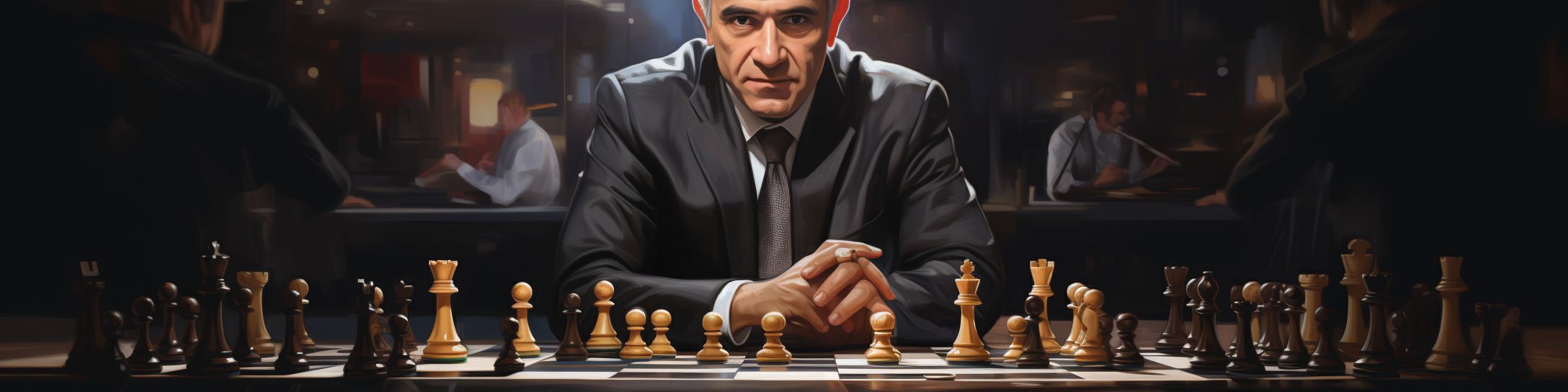
Conquest of the world title
Garry Kasparov's journey to the world title was a remarkable feat that firmly cemented his place in chess history. Following a meteoric rise in the chess world, and after numerous significant victories, Kasparov faced the reigning champion Anatoly Karpov in 1984.
The duel with Anatoly Karpov
Their clash for the world championship title has become legendary in chess history. Kasparov, only 21 years old, was put to the test by Karpov, a seasoned champion renowned for his solid defense and his ability to exploit his opponents' mistakes. The series of games was intense and dramatic, but after many rounds, the result was a draw.
The climb to the title
Despite this setback, Kasparov was not discouraged. In 1985, he faced Karpov again for the world title. This time, with a revised strategy, Garry Kasparov shone, winning the match. At just 22 years old, he became the youngest world chess champion ever, a record he still holds.
If you would like to learn more about this prestigious title that was awarded to Garry Kasparov and understand what "GM" and "WGM" mean, I invite you to read our detailed article: THE TITLE OF GRANDMASTER IN CHESS: GM AND WGM .
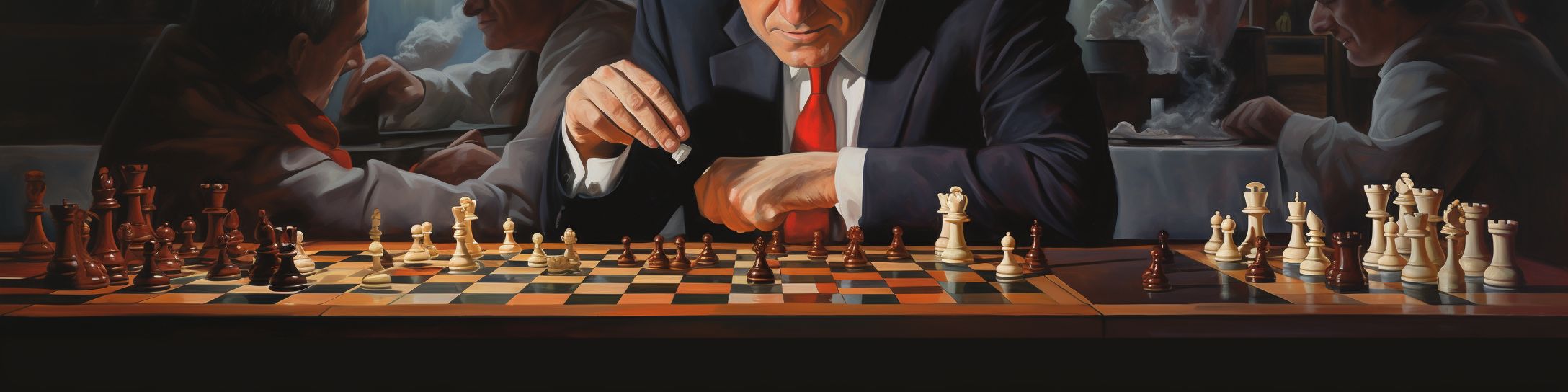
Kasparov facing the world
Following his spectacular rise to the rank of world champion, a new chapter in Garry Kasparov's life began. This chapter highlights Kasparov's transition from the world of chess to that of politics and global advocacy.
The challenge of artificial intelligence
Garry Kasparov's name became synonymous with the struggle between man and machine when, in 1996 and 1997, he challenged IBM's Deep Blue computer to chess matches. These challenges captured the world's attention and sparked debates about the limits of technology and human potential.
Political leader and human rights advocate
After retiring from professional chess in 2005, Kasparov led an active political engagement in his native Russia. He became a vocal critic of Vladimir Putin's government and a fervent advocate for civil liberties, a voice that resonated around the world.
Ongoing contribution to the game of chess
Although he has stopped playing professionally, Garry Kasparov has never completely abandoned the world of chess. He continues to promote the game through various activities, including coaching, online chess, his involvement with the World Chess Federation, and writing books on the subject.

Duel against Deep Blue
Garry Kasparov's life took a new turn when he found himself facing an adversary of a different kind: a machine. An IBM supercomputer named Deep Blue .
First Confrontation
In 1996, Kasparov faced Deep Blue for the first time in a match that captured the world's attention. He won the first game with a score of 4-2, proving the effectiveness of human tactics against artificial intelligence.
A return to revenge
IBM didn't stop there, however. The Deep Blue team reworked the program's flaws and returned in 1997 with a more powerful machine. In an epic rematch tournament, the supercomputer managed to defeat the world champion with a score of 3.5-2.5, marking a turning point in the history of chess and artificial intelligence.
The legacy of the duel
The Kasparov vs. Deep Blue duel remains a landmark in chess history and an impressive testament to technological progress. Although the defeat was a bitter blow for Kasparov, this challenge demonstrated to the world that computers could rival human intelligence at a high level, permanently transforming our perception of artificial intelligence.
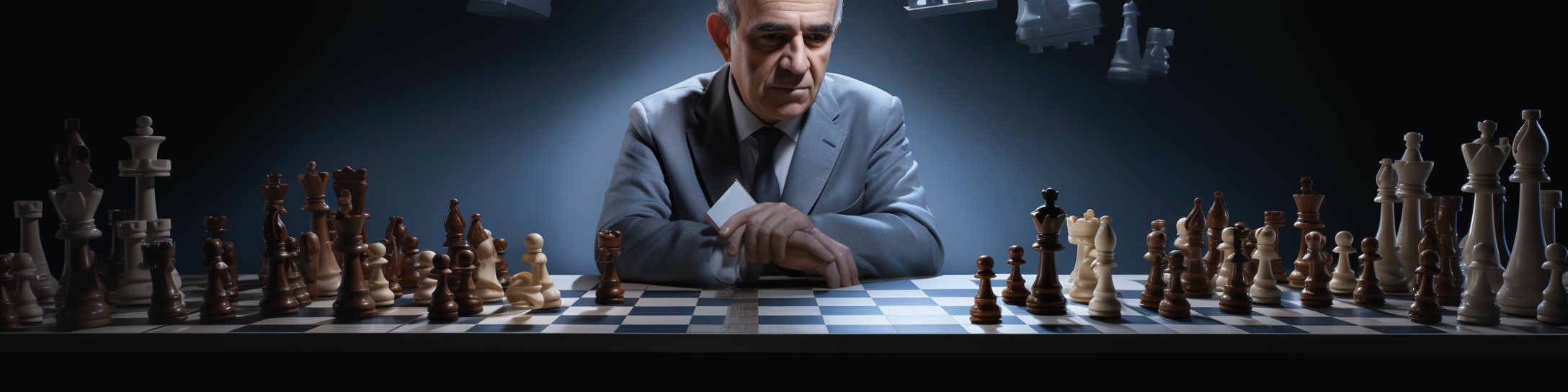
Retirement from chess and entry into politics
In 2005, the roar of former chess king Garry Kasparov echoed across the chessboard for the last time. This year marked a radical turning point in the life of the chess player, known until then for his prowess on the board. To everyone's surprise, Kasparov decided to hang up his pawns for good and devote himself entirely to politics.
Goodbye to chess
At the peak of his career and still world number one, Kasparov made the bold decision in 2005 to retire from competitive play. His final tournament, the Linares in Spain, was marked by a triumphant victory. This retirement sent shockwaves through the chess world, leaving his fans and opponents stunned by this unexpected decision.
A new battle: politics
Garry Kasparov's withdrawal from the world of chess was not a retirement. On the contrary, it marked the beginning of a new battle, this time on the Russian political stage. Making strategic moves as if in a game of chess, Kasparov became an emblematic figure of the Russian opposition, denouncing corruption and authoritarianism.
Impact and influence
Although his political career was not as successful as his reign on the chessboard, Garry Kasparov continued to influence millions of people. His commitment to democracy and his criticism of authoritarian regimes earned him recognition and respect far beyond Russia's borders.
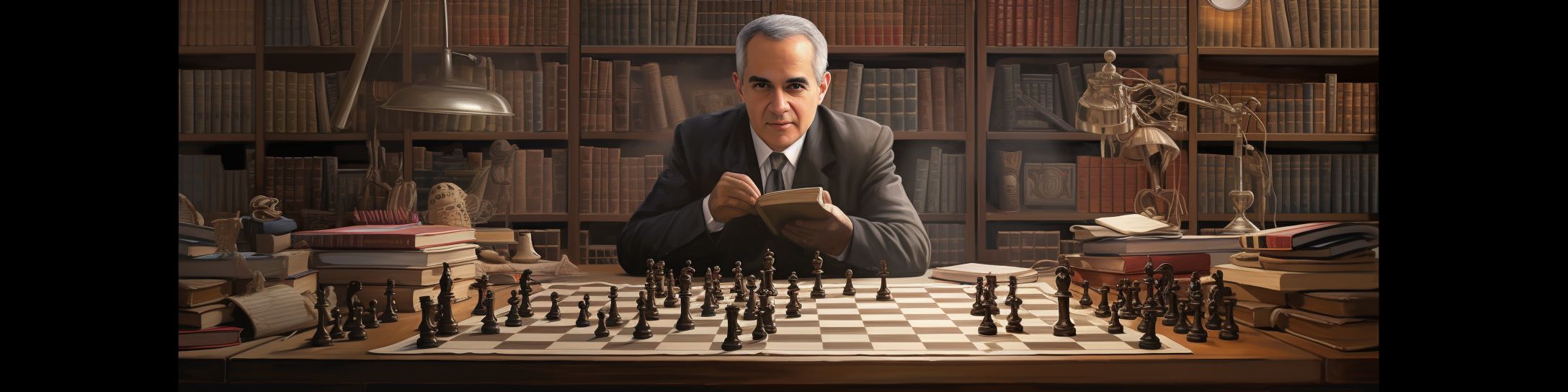
Kasparov, the author and lecturer
Despite his retirement from chess, Garry Kasparov remained an influential and respected figure. Since stepping away from international chess, he has used his analytical and strategic mind, his charisma, and his vast knowledge to forge a new identity: that of an author and lecturer.
Kasparov as an author
Since 1983, Garry Kasparov has written or co-written more than twenty books. His writings encompass a wide range of subjects: from chess techniques and chess analysis to political and social issues, as well as reflections on artificial intelligence and robotics. In his books, Kasparov has used his status as a chess champion to explore personal stories, mental strategies, and life lessons, always with the precision and clarity of analysis that characterized his chess games.
Kasparov, a sought-after speaker
As a speaker, Garry Kasparov has been invited to speak at forums, universities, business associations, and international organizations worldwide. His preferred topics range from chess strategies applicable to business and international politics to the importance of critical thinking in the information age. Kasparov's wisdom, charisma, and insight have earned him a loyal following, and his prophecies about political and technological dangers have been remarkably prescient.
Today, Garry Kasparov dedicates himself to a variety of intellectual and philanthropic activities, combining his love of words with his passion for chess. Whether through his writing or his speeches, Kasparov continues to influence and fascinate, marking yet another chapter in an already exceptional life.

The indelible legacy of Garry Kasparov
Even as Garry Kasparov's personal and professional stories intertwine to reveal a hectic life, it is impossible to deny the importance of his contribution to the world of chess and to society in general.
A chess prodigy of all time
Garry Kasparov's legacy in the world of chess is simply unparalleled. With an aggressive playing style and an incredible capacity for innovation, Kasparov pushed the boundaries of what was thought possible in chess. His dominance of the game for over two decades set records that will likely remain unbroken.
Influence in politics and beyond
Garry Kasparov also left an indelible mark on the world beyond chess. As a vocal critic of the Russian regime and a champion of democracy, Kasparov gave a voice to the voiceless. His work as a writer and lecturer continues to influence future generations, just as his chess game did years before.
Visionary of digital chess
Finally, by agreeing to play against Deep Blue, IBM's artificial intelligence, Garry Kasparov not only made chess history but also opened the door to a new era of digital chess. His influence continues to be felt today with the rise of online chess platforms and computer chess competitions.
In summary, Garry Kasparov's impact cannot be denied. His legacy transcends the chessboard and continues to inspire and influence the world of chess and beyond.
For those fascinated by the stories of chess grandmasters, don't miss our article on another legend of the game, Bobby Fischer. Discover Bobby Fischer 's story and his exceptional career on the world chess stage.