

The story of Bobby Fischer
of reading

Bobby Fischer's childhood
Born on March 9, 1943, Bobby Fischer is one of the most prominent figures in the history of chess. His full name is Robert James Fischer, and he was born in Chicago, but his family moved to Brooklyn, New York, when he was only six years old. This period of his life would prove crucial in the emergence of his unparalleled talent at chess.
Introduction to Chess
Bobby Fischer's chess journey began at the age of six when he discovered a chess set in a candy store. Fascinated, he bought a small set and learned to play using the instructions he found in the box. His fascination continued to grow, and he quickly embarked on a career as a semi-professional player.
The chess prodigy
At 13, Bobby Fischer was already considered a chess prodigy . He won the United States Junior Chess Championship at just 14, and became an International Grandmaster at 15, the youngest player to achieve this title at the time. These early victories were a testament to his extraordinary mastery of the game of chess, which would transform the world of the sport forever.
Guided by a mentor
Much of Bobby Fischer's rapid progress is attributed to his mentor and coach, William Lombardy . Lombardy recognized Fischer's talent and encouraged him to pursue his dream of becoming the best chess player in the world. Under Lombardy's tutelage, Fischer developed his raw talent and gained a deep understanding of chess strategies.
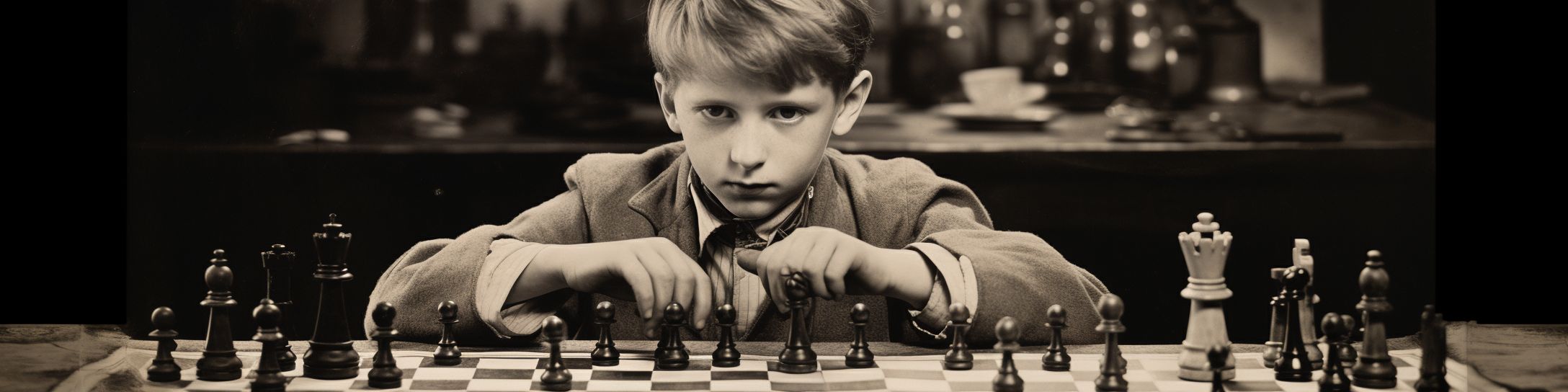
An introduction to the game of chess
Bobby Fischer discovered chess at the age of six. His sister, Joan, had bought a chess set at a candy store and taught him the basic rules. Very quickly, Bobby showed an exceptional interest and aptitude for the game.
A consuming passion for gaming
During his childhood, Bobby Fischer spent virtually all his free time playing and studying chess. He had a true obsession with chess, to the point that his mother worried about his mental health. However, his unparalleled dedication was about to take him to incredible heights.
Bobby's mother's involvement in his learning
Although Bobby was introduced to chess by his sister, it was his mother, Regina Fischer, who played a pivotal role in nurturing his passion. Concerned for her son, she sought out local chess clubs where Bobby could meet and socialize. This led him to join the Federation Manhattan Chess Club, where he began interacting with more experienced players and learning new strategies.
Self-directed learning
After joining the chess club, Bobby Fischer began learning almost entirely on his own. With unparalleled determination and perseverance, he spent hours studying chess books and analyzing past games. It was thanks to this intensive self-study that he quickly became one of the most gifted players of his time.
National genius
Eccentricity and talent are often inseparable when it comes to Bobby Fischer. This isolated, self-taught prodigy has acquired an international reputation that has transcended the world of chess to establish him as a national symbol and, at the same time, as a fascinating enigma of the world.
An unshakeable summit
At the age of 15, Bobby Fischer became the youngest Grandmaster and the youngest World Chess Championship candidate, setting records that would remain unbroken for decades. His continued rise, including his historic victory against Boris Spassky in the 1972 World Championship, alternated between exceptional chess achievements and a mysterious withdrawal from the limelight.
A paradoxical icon
Despite his often erratic behavior and tumultuous relationship with chess federations, Bobby Fischer managed to establish near-total dominance on the chessboard for much of his career. His contributions to understanding the game, combined with his fierce will to win, defined an era in chess history and made him a living legend.
The international tournament
As early as 1958, Bobby Fischer entered the big leagues and made his debut on the international circuit. This period was decisive in his career, forging his reputation and his status as a chess prodigy.
His rise
In 1958, at just 15 years old, Fischer became the youngest national champion when he won the United States Chess Championship. This title opened the door to international competitions. The following year, he reached another milestone by becoming the youngest grandmaster (the most prestigious title that can be awarded to a chess player) in history at the time.
International conquests
Crossing borders, Fischer dominated numerous international tournaments. His stunning victory at the Bled tournament in 1961 positioned him as a serious contender for the world title. Fischer continued to build his legend by winning the Candidates Tournament Interzonal in 1970 with an impressive score.
The summit of chess
Fischer's ultimate triumph came in 1972 when he won the World Chess Championship against Soviet champion Boris Spassky in Iceland. This victory was not only personal, but also symbolized Western dominance in a game that had been dominated by the Soviets since World War II. Taking the world crown truly cemented his place in history as one of the greatest chess players of all time.
If you are intrigued by Bobby Fischer's exceptional rise and wish to better understand the meaning and importance of the title "Grandmaster", see our detailed article on The Grandmaster Title in Chess: GM and WGM .

Fischer's memorable duels
Always seeking to push his limits, Bobby Fischer distinguished himself with memorable chess duels that have marked the history of this strategy game.
The Fischer-Byrne duel, 1956
One cannot discuss Bobby Fischer's career without mentioning his exceptional duel against Donald Byrne in the United States in 1956. At only 13 years old, the young prodigy achieved "Fischer's Game of the Century", a masterful chess game that earned him early recognition in the chess world.
The pivotal year of 1970
In 1970, Bobby Fischer achieved several victories in international tournaments, demonstrating exceptional talent and an incomparable mastery of the game of chess.
Fischer v. Spassky, 1972
No one can forget the famous chess duel between Bobby Fischer and Boris Spassky in 1972. This exciting confrontation, better known as the "Match of the Century", has gone down in history as one of the greatest chess games of all time.
The political controversies surrounding the failure
Despite his undeniable genius on the chessboard, Bobby Fischer's work cannot be fully appreciated without taking into account the political controversies that marked his career and private life.
Refusal of the rematch with Spassky
In 1975, the world eagerly awaited the rematch between Bobby Fischer and Boris Spassky. However, due to disagreements over the terms of the match, Fischer declined the offer to defend his title, leading the International Chess Federation to declare him a forfeit.
Exile from America
In 1992, violating international sanctions against Yugoslavia, Bobby Fischer challenged American authority by playing a rematch against Spassky in Sveti Stefan. Following this violation, Fischer became a fugitive wanted by the American government and lived in exile for years, first in Hungary, then Japan, and finally Iceland, where he spent his last years.
Controversial political opinions
Bobby Fischer was also known for his controversial political statements. Some of his publicly expressed opinions were widely criticized and contributed to his image as an eccentric. Despite these controversies, Bobby Fischer's chess legacy remains undisputed, shaping the evolution of the sport and continuing to inspire future generations of chess players.

The influence of the Cold War on Fischer
As talented as he was controversial, Bobby Fischer went down in history not only as a chess grandmaster, but also as a major figure in the Cold War.
Chess, an allegory of the Cold War
His 1972 clash with Soviet champion Boris Spassky is seen by many as a metaphor for the political tensions between East and West. It was not simply a sporting competition: it was a stage where the full intensity of the duel between the world's superpowers was played out.
Under the spotlight of global politics
The American hero versus the Russian champion thus became an illustration of the ideological and strategic competition that defined the era. In this spirit, Fischer's victory symbolized a victory for American liberal democracy.
Fischer, a victim of the Cold War?
While some believe that Bobby Fischer benefited from this Cold War dynamic to build a name and reputation, others believe that the excessive pressures and attention weighed heavily on the young prodigy and contributed to his subsequent mental and emotional instability.
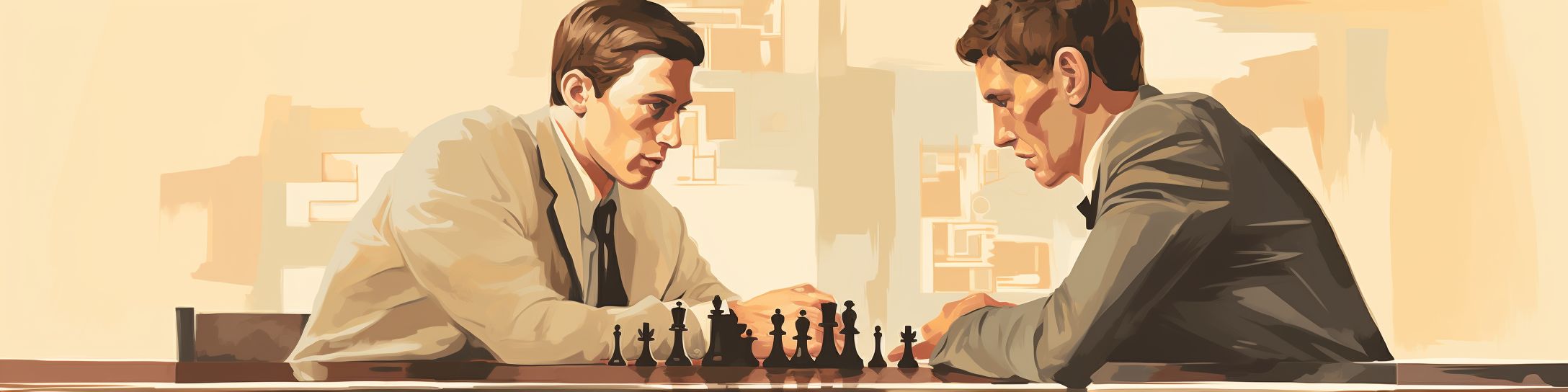
Bobby Fischer's heyday in the world of chess
While the world trembled under the tension of the Cold War, another battle oozed from complex strategies on a chessboard. It was in this atmosphere of intense competition that Bobby Fischer reached the peak of his career and attained heights never before seen in the world of chess.
The climb to the world title
It was in 1972 that Bobby Fischer reached the peak of his career. After years of fierce competition and daring chess strategies, he won the World Chess Championship, marking an iconic victory for the United States over the Soviet Union.
The consecration of a genius
Bobby Fischer's incredible ability to foresee and anticipate his opponents' moves contributed significantly to his meteoric rise to the world title. His victories were hailed not only as an affirmation of his chess superiority, but also as a demonstration of intelligence and tactical finesse.
A master of strategy on the chessboard
Bobby Fischer was known for his bold and innovative chess strategies. His playing style was often unpredictable, making him inaccessible to many of his opponents. Fischer didn't just play moves; he created true works of art on the chessboard, combining elegant moves, daring tactics, and a perfectly mastered long-term strategy.
The decline after the peak
Unfortunately, Bobby Fischer's career peaked too quickly. After winning the World Championship in 1972, his career was marred by controversy and premature retirement. Despite these setbacks, Fischer's legacy continues to inspire and influence chess players worldwide today.

Fischer's retirement
While Bobby Fischer was distinguished at the height of his career by his extraordinary chess talent, his disappearance from international tournaments also made him famous. After reaching the top, why did he choose to retire?
A sudden and unexpected withdrawal
At the peak of his career in 1975, Bobby Fischer surprised the chess world by refusing to defend his world championship title. His absence from the International Chess Federation meeting, where he was scheduled to face Anatoly Karpov, marked the beginning of his premature retirement.
An unappreciated genius
Bobby Fischer's behavior is often attributed to his eccentric personality and a possible undiagnosed mental illness. Although the chess world tried to persuade him to return, Fischer remained withdrawn, denouncing the tournament system and sometimes even the game itself.
Sporadic return to the chessboard
Bobby Fischer made a few public appearances after his retirement, the most notable being his rematch against Spassky in 1992. However, these rare moments were not enough to dispel the mystery of his withdrawal from chess.
A tragic end
Although his chess genius is undeniable, Bobby Fischer spent most of his life in isolation and paranoia. This complex image of a fallen hero, a misunderstood genius, and a chess legend continues to intrigue and fascinate the world, even after his death in 2008.

Bobby Fischer's legacy in the world of chess
Bobby Fischer's name still resonates on the world chess scene, long after his retirement and death. Undeniably, his presence in the chess world left an indelible mark, both because of his extraordinary skills and the controversies that accompanied his career.
The impact on modern chess
Bobby Fischer was not only a great chess player, he also helped revolutionize the way the game was played. His innovative strategies, hard work, and dedication to the game influenced generations of chess players and shaped the game as we know it today.
An inspiration for future chess masters
Despite the controversies surrounding his life, Bobby Fischer inspired many young talents to embrace the game of chess. Many of today's grandmasters acknowledge Fischer's influence on their own careers and often consider him a model of dedication and skill.
A controversial legacy
Bobby Fischer's legacy extends far beyond his chess genius. His complex personality, provocative statements, and controversial political stances have created a figure who, while sometimes criticized, remains undeniably fascinating and inextricably linked to the history of chess. Fischer's life offers a glimpse into the intricate intersection of genius, ambition, and controversy.
Lasting influence on the world of chess
Decades after his retirement from competition, Bobby Fischer's shadow continues to loom large over the world chess scene. His iconic figure remains a benchmark, a source of inspiration, and a subject of lively debate among chess enthusiasts.
After exploring Bobby Fischer's incredible journey, you might also be interested in the story of another chess prodigy who dominated the chess world in the 21st century. Discover the rise and reign of Magnus Carlsen , the Norwegian champion.