

Origins of chess pieces
of reading
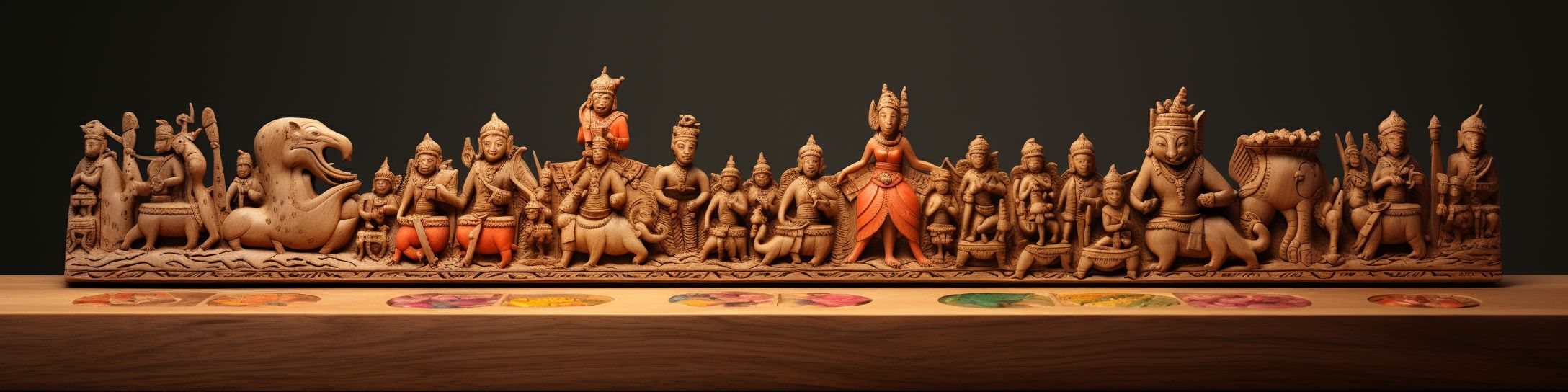
Chaturanga: The coins and their significance in Indian culture
One of the oldest ancestors of chess, Chaturanga , has its roots in ancient India. Developed around the 6th century, Chaturanga is considered by many historians to be the creative precursor that eventually evolved into the chess game we know and love today.
Chaturanga and its coins: a representation of the Indian army
Chaturanga is more than just a game: it is a representation of the Indian army of the time. The game includes pieces such as the king ( raja ), the general ( mantri ), the elephants ( hasti ), the chariots ( ratha ), the horsemen ( ashva ) and the soldiers ( padati ).
The evolution of Chaturanga pieces over time
Over time, the pieces in Chaturanga have undergone many changes, both in their appearance and their movement. For example, the elephant, which in Chaturanga only moves one square at a time diagonally, later evolved into the bishop, which has long-range diagonal moves in modern chess.
Chaturanga: a cultural bridge between India and the rest of the world
The complexity of Chaturanga and the symbolism behind each piece have captivated foreign cultures, which has ultimately led to its spread and adaptation in various cultures around the world, including Persia where it evolved into Shatranj .
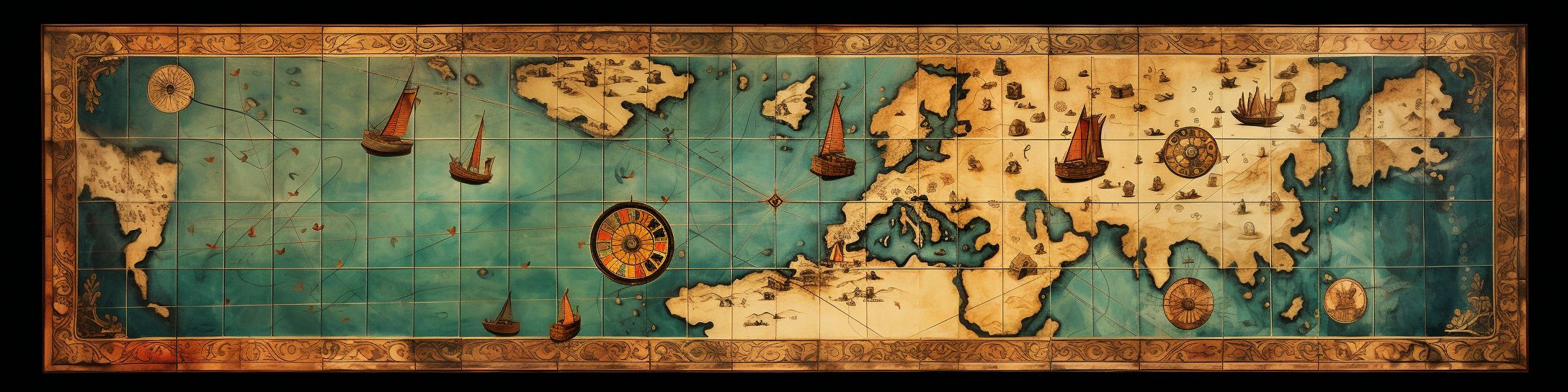
From Chaturanga to Shatranj: The Journey of Coins Across the Middle East
Having explored the origins and significance of Chaturanga pieces in Indian culture, it is interesting to trace the journey of these same pieces as they traveled through the regions of the Middle East. Between Indian Chaturanga and Persian Shatranj, we witness a fascinating cultural transmutation of chess pieces.
The Shatranj: Persian adaptation of the Chaturanga
When Chaturanga reached Persia in the 6th century, it was adopted and adapted to become Shatranj. While retaining the basic rules of Chaturanga, Shatranj redesigned the pieces to reflect Persian aesthetics and cultural values. Shatranj pieces were generally more abstract in design than their Indian counterparts, reflecting the influences of Persian art.
The symbolism of coins in the Shatranj
While Chaturanga coins clearly depicted infantry and cavalry figures, Shatranj coins were more symbolic, signifying concepts rather than specific entities. For example, the Farzin , or 'Vizir,' represented the king's advisor rather than a specific military unit.
The evolution of the parts up to Europe
As Shatranj spread and evolved in various regions of the Middle East and North Africa, the pieces continued to change, preparing for their next major transformation in Europe. Once in Europe, Shatranj evolved into the game of chess we know today, with its familiar pieces such as the king, queen, bishop, knight, and pawn.
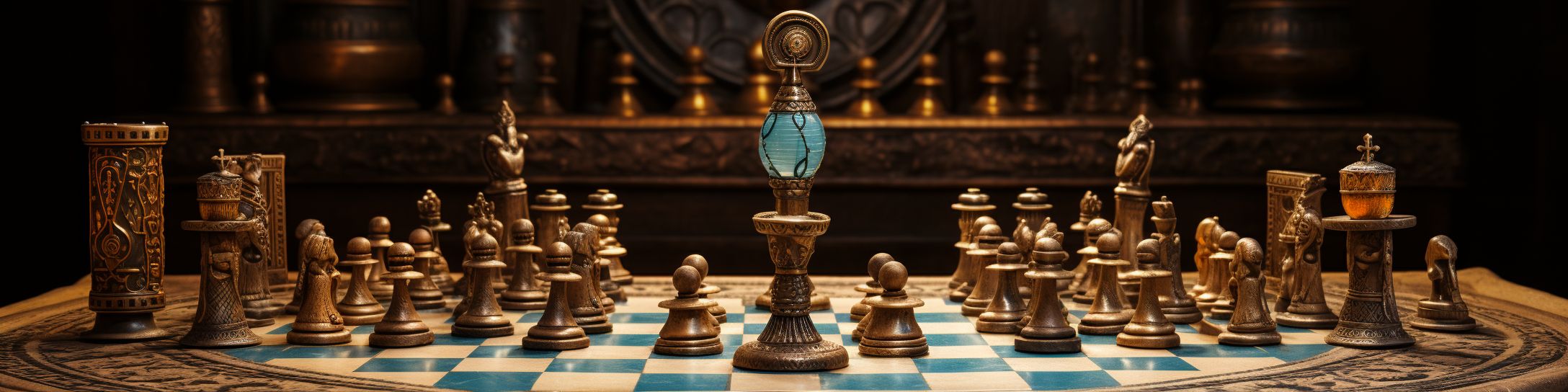
Glossary of Shatranj's Pieces: Interpretation and Cultural Significance
Venturing west from the Indian subcontinent, we find ourselves in Persia, where Chaturanga evolved into a variant called Shatranj. This game retained most of the rules of Chaturanga but took on new symbolic meanings within the context of Persian culture.
The Shatranj coins and their symbolism
The Shatranj featured several types of coins, each with its own cultural and strategic significance. One of the most important coins was the 'Shah,' or king, which, as in the Chaturanga, represented authority and power. The 'Farzin,' or advisor, was positioned next to the Shah, symbolizing the wise and balanced counsel upon which the king's rule often depended. The 'Ruhk,' or chariots, indicated the importance of cavalry in Persian battles.
The influence of Shatranj on European failure
Just as Chaturanga influenced Shatranj, the latter had a significant impact on the development of chess in Europe. Through centuries of cultural exchange and conquest, Shatranj was brought to Europe where its pieces were interpreted and adapted to reflect medieval European culture. This is how we got the chessboard we know today.
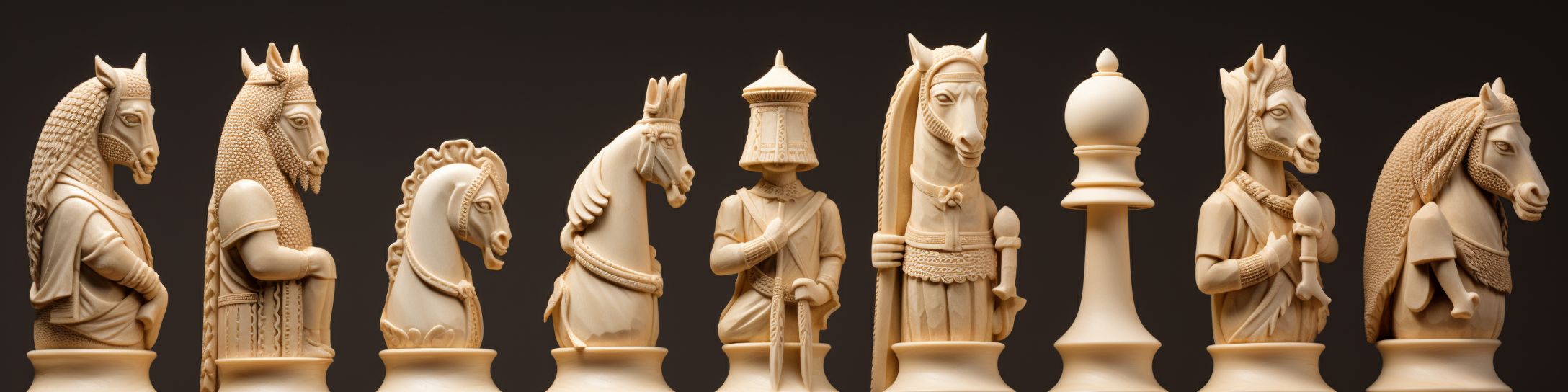
The evolution of the pieces: from Shatranj to the modern European chessboard
The journey of chess pieces across continents and through the ages is a truly fascinating adventure. After a deep dive into the intricacies of Chaturanga and Shatranj history and culture, it is now time to follow their migration to Europe, where they underwent significant changes and evolutions.
From Persian influences to the advent of chess in Europe
The European chessboard as we know it today is the product of a rich cultural heritage. It gradually took shape from the Shatranj, influenced by medieval Persia. Medieval Europe, however, introduced its own modifications, particularly in the representation and power of the pieces.
The emergence of the modern game system
In Europe, during the Middle Ages, chess pieces began to take their modern form. The most notable changes were the introduction of the bishop, the transformation of the Persian vizier into the queen, and the addition of pawn movement. These innovations contributed to the complex and captivating dynamics of the modern European chessboard.
The cultural legacy of chess pieces
The different chess pieces symbolize distinct aspects of medieval society. Through them, we can observe the social hierarchy of the time and understand the cultural significance of this evolution. Each piece has its own story, which reveals much about the period and culture from which it originated.
Conclusion: A journey through history
The study of the evolution of chess pieces is like a journey through human history, reflecting the values and systems of each era. The game of chess as we know it today is a harmonious blend of Indian, Persian, and European influences, paying homage to its rich history while continuing to develop and refine itself for future generations.
Having grasped the profound symbolism of European chess pieces and their rich heritage, you'll likely be intrigued by how some of these designs have been refined over time. To learn more, explore the history of the Staunton design . This iconic style is now synonymous with modern chess in many parts of the world.
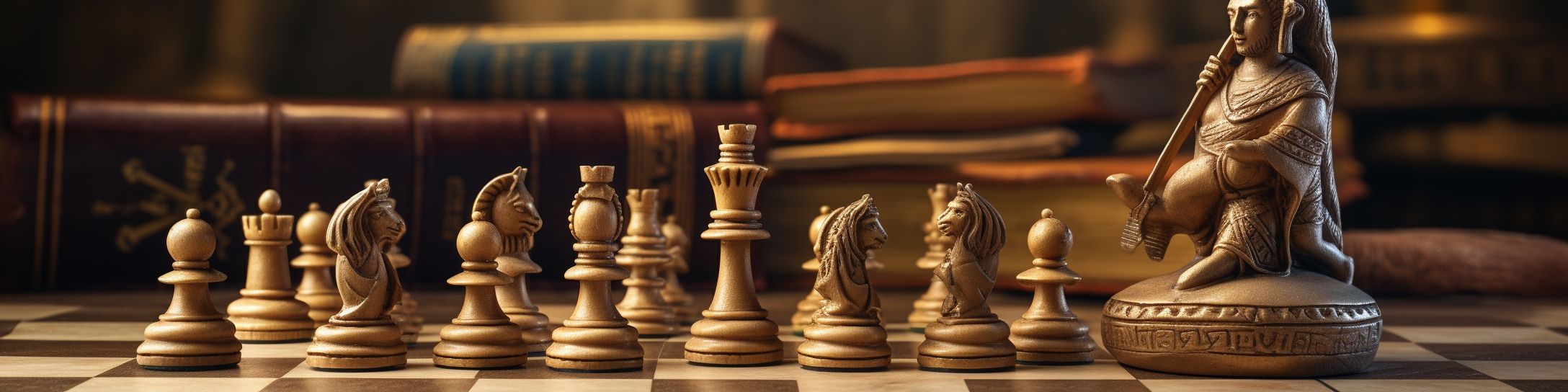
Influence of religion on the representation of coins in Europe
As the game of chess spread to Europe, it was influenced by local religious beliefs. This influence particularly affected the appearance and representation of the pieces on the chessboard.
The Church and Forbidden Representations
For example, due to religious prohibitions imposed by the European Church during the Middle Ages, the depiction of human figures was commonly avoided. Thus, the game pieces, while retaining their Persian and Arabic names like Rukh (chariot), did not adopt the literal images associated with those names. Instead, they took on abstract and stylized forms to avoid violating religious guidelines.
Coin change and Christian influence
Furthermore, the Vizier piece, present in the Shatranj, was replaced by the Queen in European chess. This potentially reflects the influence of the growing importance of queens in European courts of the time, as well as the rise of female power in the Christian church.
Influence of the Renaissance on the form of rooms
It was during the Renaissance that the coin shapes we use today were widely adopted in Europe. Religious restrictions were relaxed, allowing coins to take on more recognizable figurative forms, including figures of nobility such as the king and queen, and ecclesiastical figures such as the bishop.
The representation of chess pieces has therefore been heavily influenced by the cultural and religious context in which the game developed, giving a fascinating insight into the interaction between games, religion, and society.
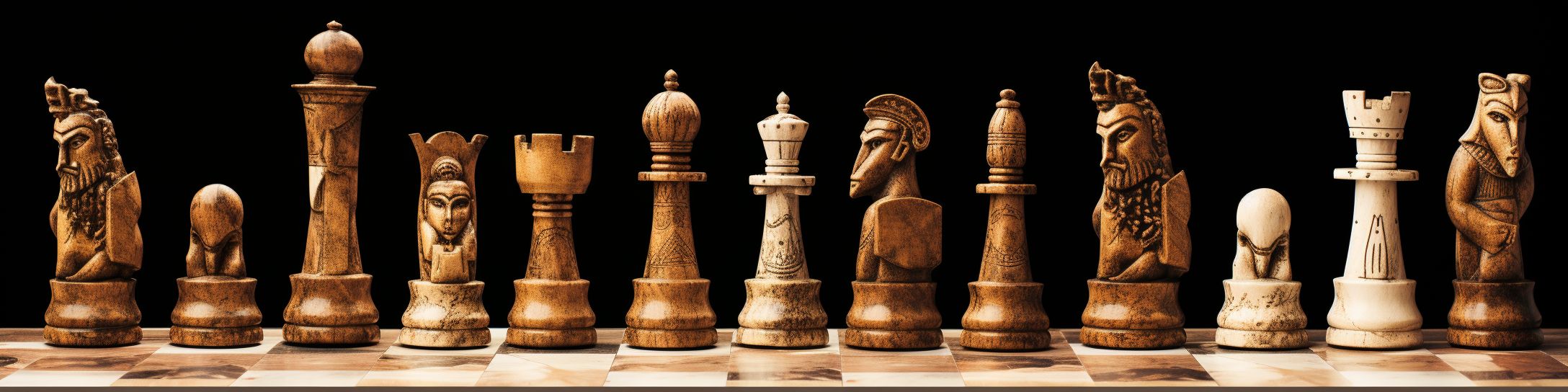
The evolution of the rules of the game: How the movements of the pieces have changed over time
From the humble Chaturanga to the exhilarating European chessboard, the rules of the game have undergone countless modifications and adaptations. In particular, the movements of the pieces have evolved significantly.
Chaturanga: The basic movements
In the original Chaturanga game, each piece had fairly simple predefined moves. For example, the infantry, ancestor of the pawn, only advanced one square at a time, and the cart, which would later become the rook, moved horizontally or vertically without restrictions.
The Shatranj extends its movements
Upon arriving in Persia, the pieces retained their basic Chaturanga moves but also acquired new abilities. The farzin (which would evolve into the bishop) began to move diagonally, and new moves for the Shah (king) and the ferz (queen) were introduced.
European chess: The rules of the game are being modernized
When the game reached Europe, the rules governing piece movement underwent a major transformation, leading to the emergence of the modern rules we know today. For example, the pawn gained the ability to move two squares on its first move, opening up previously unexplored strategic possibilities.
In conclusion, although the rules of chess have evolved considerably over the centuries and across continents, the original objective of Chaturanga—to replicate the strategy and tactics of war on a game board—has remained central to the game. Thus, it can be said that the essence of chess has not changed all that much.
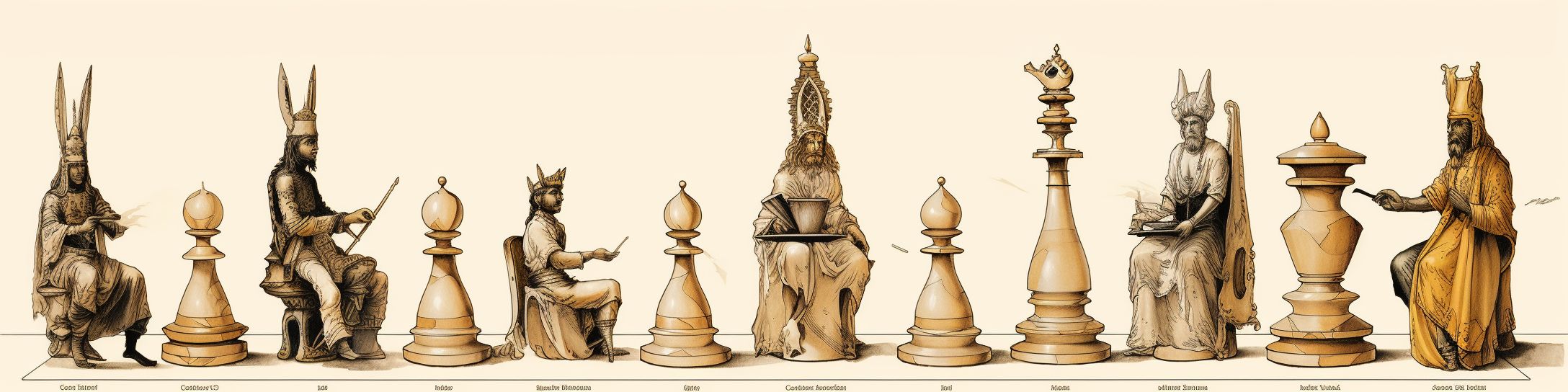
The artistic design of the pieces throughout the ages
Just like the rules of the game, the aesthetics of chess pieces have evolved remarkably from their origins in the ancient game of Chaturanga to modern chessboards in Europe. Each civilization has imprinted its cultural distinctiveness on the pieces, thus reinforcing their symbolic character.
The Chaturanga coins: a reflection of ancient society
In India, Chaturanga coins did not simply represent military elements. They also symbolized the different strata of society, offering a rich perspective on the social structure of the time.
Shatranj: Persian influence
Shatranj, the Persian version of the game, retained the essence of Chaturanga but introduced its own stylistic and cultural variations. The pieces became more abstract and less figurative, likely in response to Islamic restrictions on human and animal representations.
European failures: a fusion of influences
Upon arriving in Europe, chess pieces underwent another transformation. The design of the pieces incorporated many artistic styles, ranging from Romanesque austerity to Gothic finesse and precise Renaissance details, and including the eloquence of the Baroque.
Contemporary artistic expression
Today, chess pieces are more than just a game; they have become a means of artistic expression, with stylistic variations ranging from modernist minimalism to complex thematic designs. This testifies to the continuous evolution of artistic styles expressed through this centuries-old game.
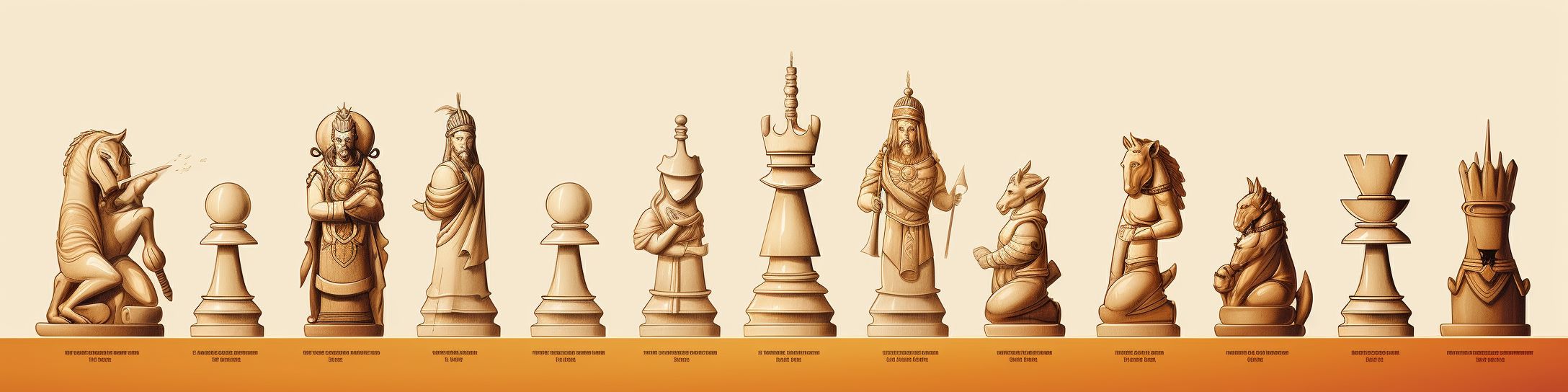
Iconic chess pieces and their historical significance
Having already explored the fascinating travel histories of traditional chess pieces, let's now delve deeper into the history and significance of iconic chess pieces. Each piece carries within its design the weight of a thousand years of history and cultural evolution, reflecting the beliefs, philosophies, and representations of power from different eras and regions.
The king: a supreme power on the chessboard
The king, represented in modern chess by a crown and sometimes a cross, is the emblematic piece on the chessboard. Its origins date back to India and Persia, where it was respectively called Rajah and Shah, designations meaning "king" in these cultures. The king represents supremacy and the importance of hierarchy in these ancient societies.
Abstract art in Northern Europe
In Northern Europe, particularly within cultures like that of the Vikings, chess pieces gradually abandoned the direct, symbolic representation of their Eastern counterparts. There, chess pieces became abstract and enigmatic works of art, conveying a unique beauty and mystique.
Powerful Queen: A Symbol of Female Power
Introduced later into the game of chess in Europe, the queen has become the most powerful piece on the board. Her presence and power potentially stem from the growing importance of queens and powerful women in medieval European society, symbolizing both female power and social progress.
The evolution continues
The evolution of chess pieces is a fascinating reflection of cultural and social transformations over the centuries. Each piece represents an intrinsic part of the history inherited from the civilizations that preceded us. The journey of these symbolic objects continues, promising further exciting developments in parallel with the evolution of our society.
Influence of war and politics on the design of the pieces
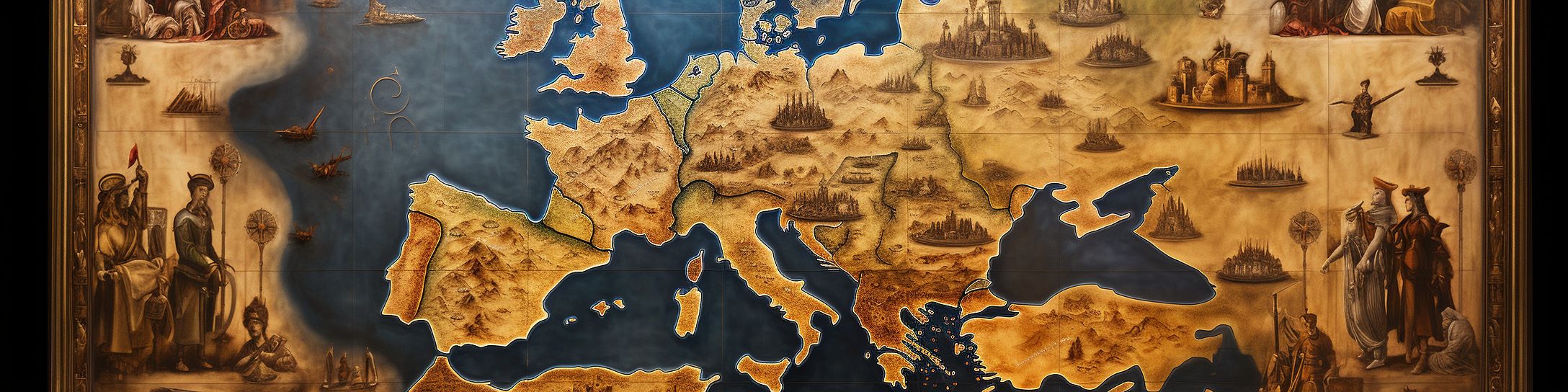
Besides religious and aesthetic influences, the design of chess pieces has also been shaped by the political and military dynamics of each era. At every stage of their journey, from the ancient empires of South Asia to the modern world of Europe, the pieces have undergone transformations that reflect political upheavals and military realities.
The reflection of military strategies in the design of the pieces
Chaturanga, which imitates the epic battles of the Gupta era in India, is a perfect example of how military strategies influenced the design of game pieces. The pawns represented infantry, the knights symbolized cavalry, the chariots illustrated war chariots, and the elephants reflected elephant war units.
The coins and political power
The representation of political power is also evident in the design of chess pieces. For example, in Shatranj, the king (Shah) is the most important piece, illustrating the centrality of the monarch in Persian culture and government. Similarly, the design of the bishop (which replaces the elephant in Chaturanga) could be interpreted as a representation of the clergy, another key institution in medieval societies.
Influence of conflicts and revolutions on European affairs
In Europe, the rise of chess coincided with numerous wars and revolutions. In this region, the design of the pieces also changed to reflect the evolution of warfare tactics. For example, the new mobility of the queen in modern chess (invented during the Renaissance) can be interpreted as a representation of the powerful queens and regent mothers of the time.
In summary, the journey of chess pieces through history and their evolving design illustrate key dimensions of human history, including wars, politics, and social change. Each form of chess, from each specific era and place, is a miniature reflection of the ideals and realities of its time.
Cultural assimilation: How plays reflect societal mentalities
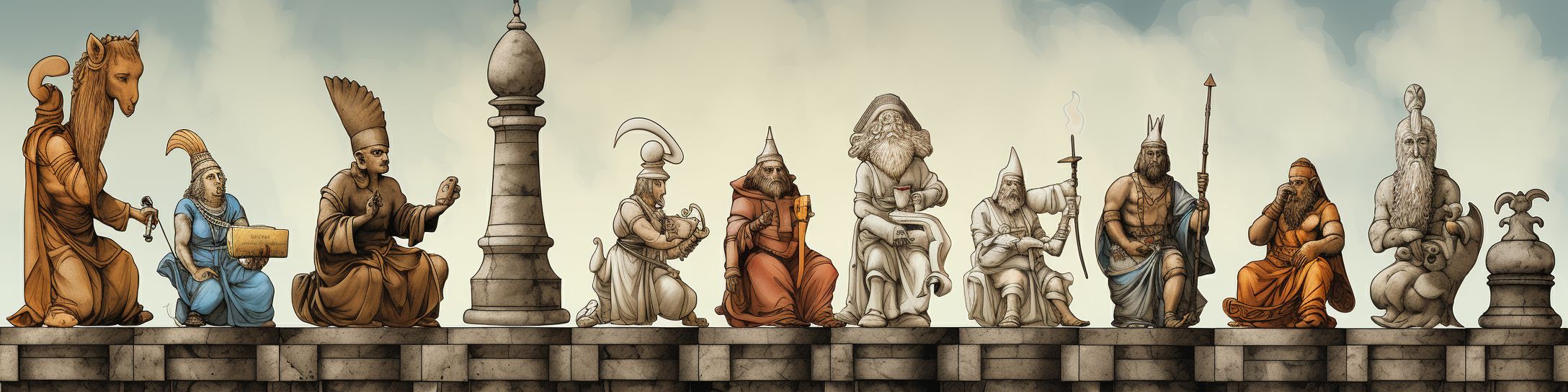
Continuing our exploratory journey into the game of chess, we come to a less discussed but nonetheless fascinating aspect of the game: the way in which chess pieces reflect the societal mindsets and cultural identities of the people who play them.
Chaturanga and Shatranj: A Mirror of Ancient Societies
Chaturanga in India and Shatranj in Persia were much more than just games. The pieces used in these ancient games were often symbolic representations of the social and political structures of these civilizations. For example, in Chaturanga, the chariot (ratha) reflected the importance of warfare in Hindu society, while the king (raja) was considered a divine figure with a pivotal role in governing and maintaining order within society.
A Window on the European Middle Ages
Just as in India and Persia, modern European chess pieces also reveal the social values and ideals that prevailed at the time. For example, the role of the Queen has evolved over the years in chess, from a relatively weak piece in Shatranj to the most powerful piece on the board in modern chess. This reflects the changing role of women in Western society.
A Map of Cultural Interactions
Furthermore, the way the coins have changed as they have passed from culture to culture is a fascinating map of cultural interactions throughout history. For example, the transformation of Chaturanga into Shatranj is a testament to the blending of Indian and Persian cultures following the Muslim invasions of India.
Chess Today: A Reflection of Our Current Values
Chess today continues to reflect our contemporary societal values. For example, the importance we place on strategy and foresight is symbolized in the way chess is played—with patience, planning, and foresight. Therefore, the history of chess offers a valuable lesson in how games can reflect our society and cultural evolution.
The role of the kingdom and the court in the representation of the plays
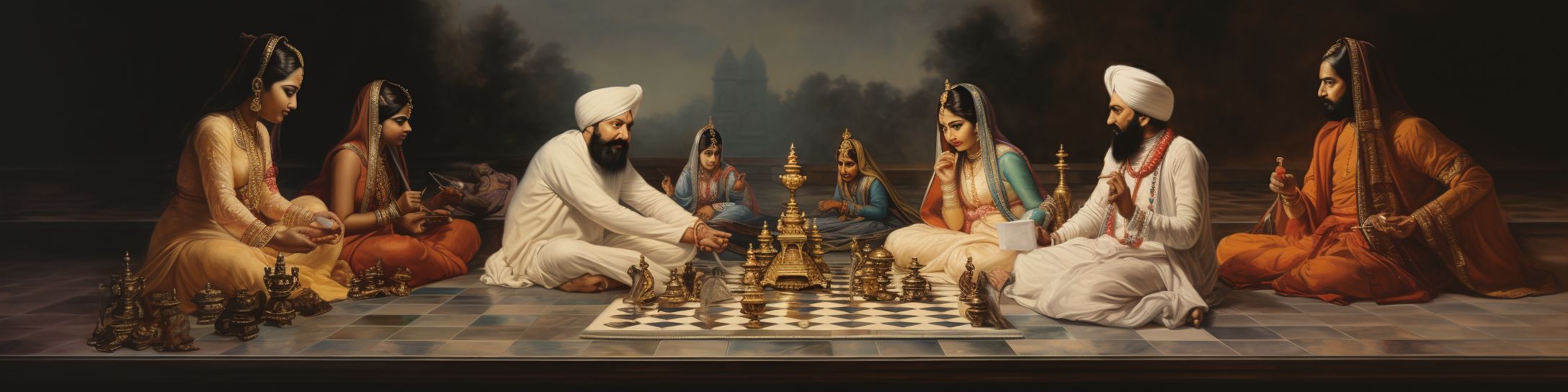
Building on previous discussions about how chess pieces have evolved and reflected the socio-cultural, economic, and political influences of different eras, it is now time to focus specifically on the role that the kingdom and court played in the representation of the pieces.
The Kingdom in Chaturanga and Shatranj
Let's begin by going back to the roots of chess in India, with Chaturanga and Shatranj in Persia. These games, based on war strategies, reflected the hierarchies prevalent in the kingdoms of the time. For example, the king, represented by the most important piece in the game, embodied the ruler of the kingdom. Other figures from the royal court, such as the advisor (equivalent to the queen in modern chess) and the elephant (which would later become the bishop), were also represented, thus illustrating the central role of royalty and the court in these societies.
The Evolution of Royal Roles in Europe
Moving now to modern European chessboards, we see that the role of the kingdom and the court in the representation of the pieces is still present, although the pieces have evolved to reflect the political and sociocultural changes of their respective eras. For example, in modern chess, while the king remains a key piece, the queen's power is significantly greater than that of her counterpart in Chaturanga and Shatranj. This can be interpreted as a reflection of the evolving role of women in society.
The Court as a Source of Inspiration
Finally, it would be remiss not to mention how the details of royal court life also informed the artistic design of chess pieces. The distinction between the pieces, from the sturdy rooks to the galloping knights, the elegant bishops, and the royal pair, illustrates the richness and dynamism of court life.
Thus, throughout its history, from the battlefields of Chaturanga and Shatranj to the refined chessboards of European palaces, the game of chess has always found an ingenious way to integrate elements of the kingdom and the court into its representation of the pieces.
Symbolism and mythology: The secret dimension of chess pieces.
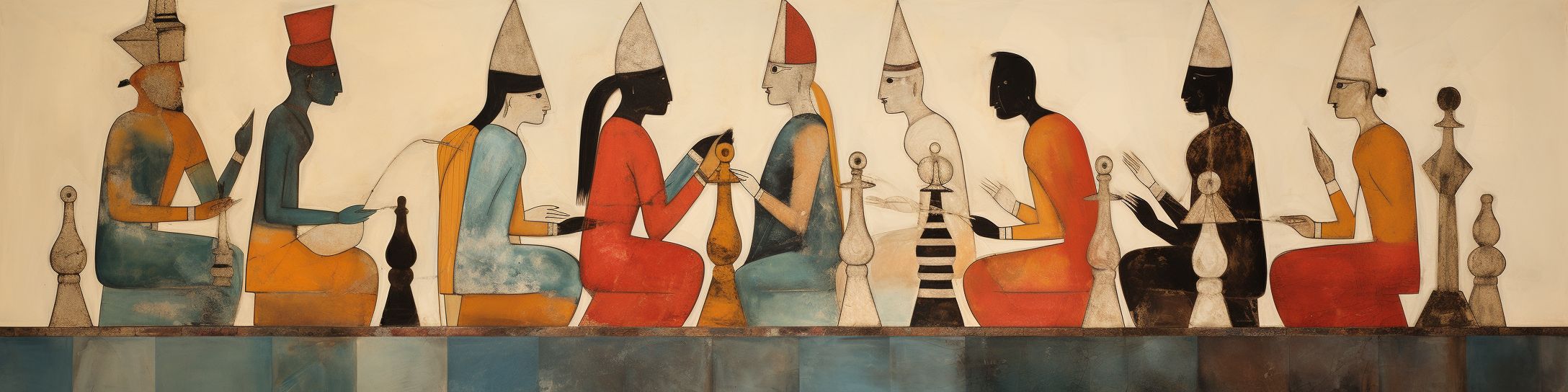
By delving deeper into the world of these ancient games, we discover a sometimes overlooked aspect: the rich symbolism and strong mythological influence that characterize chess pieces. Whether it's Chaturanga, Shatranj, or later European strategy games, each piece carries a hidden meaning that transcends its simple gameplay function.
Myths and legends embodied in Chaturanga
Dating back to the game's origins in India, the four types of pieces used in Chaturanga are not chosen at random. In fact, these pieces perfectly illustrate the four-part structure of the ancient Indo-Aryan army, a precise reflection of the social paradigm of the past. Each piece corresponded to a distinct social rank: elephants (symbols of strength), chariots (symbols of nobility), cavalry (representing warrior courage), and infantry (symbols of the common people).
Symbolism of the Shatranj coins
Further south, Persian Shatranj retained this highly symbolic approach. Each piece in the traditional Persian chess set is an abstraction of an influential figure from the Sasanian Empire. For example, the King (Shah), the Advisor (Firzan), and the Infantry (Piadeh) are meant to represent the three orders of Persian society, reflecting the Zoroastrian ideal of "good thought, good word, and good deed."
Hidden dimensions of the European game of chess
In Europe, chess continued to evolve, merging pre-existing Eastern concepts with medieval cosmology and hierarchy. For example, the king and queen symbolized the monarchy, while the sturdy rooks evoked the strength of medieval castles. Even the pawns reflected the nobility of everyday labor, embodying the peasantry. These pieces, as a whole, orchestrate a silent symphony of power, loyalty, sacrifice, and strategy—a miniature chess warrior vying for supremacy on a square battlefield.
Conclusion
The inherent complexity of board games like Chaturanga, Shatranj, and their European descendants goes far beyond simply moving pieces on a game board. These games are portals to the past, catalysts for culture, and symbolic mirrors of society. Understanding them means understanding the complex heritage of our interconnected humanity.
After delving into the captivating origins of each chess piece, it would be interesting to examine the overall evolution of the game of chess itself. Discover the complete history of chess across various ages and continents, and learn about the key turning points that have shaped the game as we know it today.