

Famous Chess Players: From Chess Legends to Modern Stars
of reading
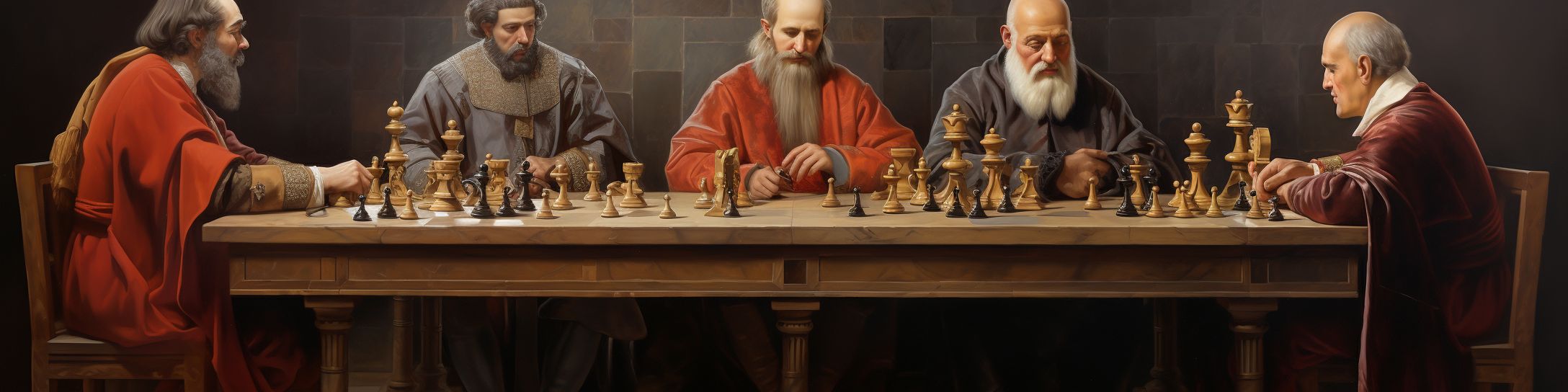
Legends of the Chessboard: First Masters of the Game
Across the globe, the chessboard has witnessed the emergence of undeniable talents, players whose mastery has transcended generations, witnesses to unparalleled tactical genius. They are the legends of chess , often born in an era when chess was far from being as widely recognized as it is today.
Paul Morphy: the American prodigy
Born in New Orleans in 1837, Paul Morphy dominated the world of chess while still a child. His exceptional skill on the chessboard allowed him to defeat the greatest players of his time. Despite the brevity of his career, Morphy remains to this day one of the most significant figures in the history of chess.
Jose Capablanca: the Mozart of chess
Originally from Cuba, José Capablanca (1888-1942) left an indelible mark on the history of chess. Becoming world champion in 1921, he was known for his flawless strategy and exceptional sense of anticipation. Even today, his games are studied by enthusiasts and professionals alike.
Alexander Alekhine: The King of Combinations
Born in Moscow, Alexander Alekhine (1892-1946) is renowned for his unpredictable openings and masterful combinations. He held the title of World Chess Champion from 1927 to 1935 and then from 1937 until his death in 1946, an undeniable sign of his supremacy and undisputed genius.
The rich history of chess is marked by the rise of these masters who have left their mark on the world of the game. Iconic figures embodying strength and strategy, they are the pillars of chess history and remain undisputed references for modern champions.
What Makes a Chess Player Famous?
The chessboard has always held an undeniable allure for sharp, visionary minds and brilliant strategists. Some of them have become famous chess players, not only for their mastery of the game but also thanks to their unique personalities and life stories.
Innate Talent and Passion for the Game
Innate talent is undoubtedly essential for excelling in chess. These famous chess players have often demonstrated an innate aptitude for the game, revealing complex strategies and brilliant moves at a young age.
Determination and Rigorous Training
As in any discipline, perseverance and discipline are the keys to becoming a chess master. From Bobby Fischer to Garry Kasparov, these famous players dedicated years of their lives to perfecting their skills, sometimes to the exclusion of everything else.
Charisma and Media Presence
Another important factor in the fame of these chess players is their personality. The most famous players are often those who can project a strong and interesting image, captivating the attention of the media and the public through their performances and fascinating personalities.
Modernity: The Internet and Social Media
With the advent of the internet, the chess scene has evolved. Platforms like Twitch and social media have allowed talented players to share their passion and skill with the world, thus gaining notoriety and popularity.
Whether they are historical figures or modern stars, famous chess players reflect the fascinating world of chess, a world where intellect, strategy, and personality meet to create unforgettable legends.

The Great Masters of the Contemporary Era
Over the years, the game of chess has continued to produce brilliant stars, and in the modern era, a new generation of chess masters has emerged, leaving their mark on the chess world. For these players, every game is a matter of meticulous strategy , intriguing tactics , and an undeniable passion for the art of the game.
Viswanathan Anand: a chess ace from India
Viswanathan Anand is widely recognized as one of the best chess players of the modern era. Originally from India, Anand, with his fast and aggressive playing style, has captivated the imagination of chess enthusiasts worldwide, successfully putting his country on the chess world map and inspiring countless young players.
Magnus Carlsen: The Norwegian prodigy
Known for his incredible introspection and profound understanding of the game, Magnus Carlsen is undoubtedly one of the most prominent figures in chess in recent years. He is considered one of the greatest chess players of all time, and his influence extends far beyond the chessboard.
Judith Polgar: the woman who broke down barriers
Excelling in a male-dominated field, Judith Polgar , originally from Hungary, is one of the greatest female chess players of all time. Her pioneering career paved the way for many other women passionate about chess, demonstrating that with talent and determination, barriers can be overcome.
Each of these modern chess players has inspired a new surge in the love of the game, creating unique new strategies and leaving a lasting legacy that will continue to influence future generations of chess players.
As we explore the profiles of famous chess players, many names stand out not only for their talent but also for a prestigious title they have earned: that of Grandmaster. This title is a recognition of their exceptional mastery of the game. If you wish to delve deeper into the meaning and history behind the title of Grandmaster in chess, as well as the distinction between GM and WGM , please feel free to consult our detailed article on the subject.
Unforgettable Moments of Chess Champions
Navigating through memorable moments, the chessboard has witnessed truly sublime moments, impressive strategic feats that have made certain players famous. These moments, which defined careers and marked history, will forever be etched in the heritage of chess.
Fischer versus Spassky: The Part of the Century
The game of the century took place during the 1972 World Chess Championship. This match between American Bobby Fischer and Russian Boris Spassky symbolizes the height of the East-West rivalry. Fischer's triumph not only shattered Soviet dominance but also propelled chess into a new era of popularity.
Kasparov vs. Karpov: An Epic Rivalry
The duel between Garry Kasparov and Anatoly Karpov has gone down in history as one of the fiercest rivalries in chess history. Together, they played five thrilling World Championships between 1984 and 1990, each encounter marked by exciting comebacks, moments of pure genius, and intense competition.
Magnus Carlsen: A Dazzling Rise
Finally, the modern world was dazzled by the rise of Norwegian prodigy Magnus Carlsen. He became a grandmaster at the age of 13 and is considered one of the greatest players of all time. His bold style and creative prowess resulted in unforgettable games, such as his victory against Viswanathan Anand at the 2013 World Championship.
These are just some of the memorable moments that have marked the history of chess. Moments that have made these players icons, admired and revered by generations of chess enthusiasts.
Analysis of the Strategies and Tactics of the Masters
In their quest for prestige and the rank of ultimate master on the chessboard, famous chess players have forged ingenious and powerful strategies. These approaches, often unprecedented and innovative, have defined their playing careers, impressing opponents and spectators worldwide.
The bold positioning
One of the defining characteristics of famous chess players is their ability to position their pieces boldly and decisively. This type of offensive placement, aimed at immediately seizing control of the board, is a common tactic among players such as Bobby Fischer and Garry Kasparov.
The unwavering defense
Alongside the audacious attack, there are also players like Tigran Petrosian, famous for his unwavering strategic defense . Known as "Petro Defense," this approach revolves around minimizing vulnerabilities while maximizing attacking opportunities.
Manipulation and control of time
Control of time is another crucial strategic factor that many chess grandmasters have mastered. A prime example is Magnus Carlsen, whose game is often characterized by seemingly slow but extremely calculated moves, creating time pressure on his opponent. This manipulation of time gives Carlsen a strategic advantage, often leading to clear victories.
The Rise in Popularity of Chess Thanks to Chess Icons
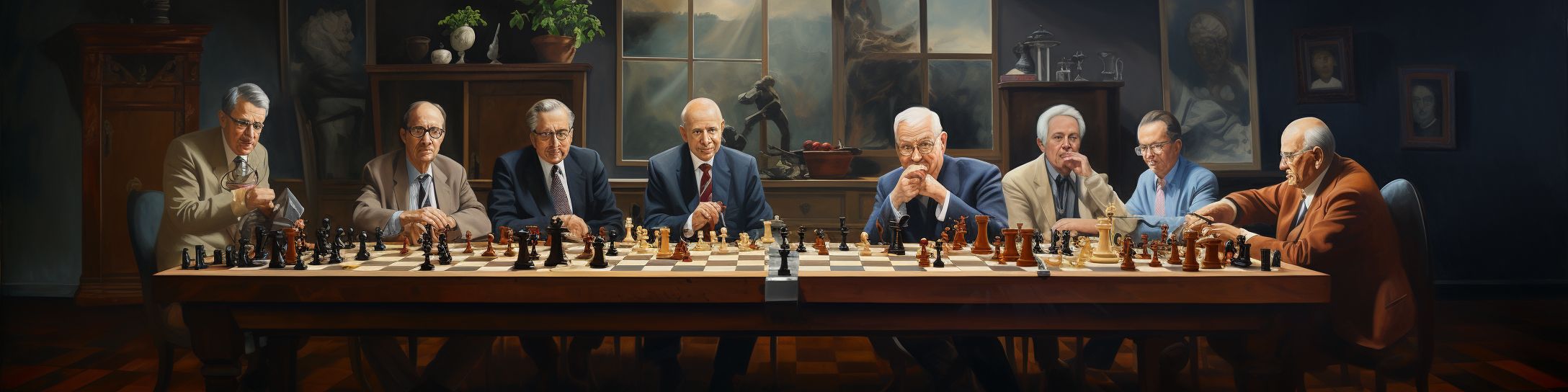
While chess is recognized as a mind sport requiring skill, patience, and strategy, the influence of famous chess players on its global popularity cannot be ignored. From the King of Chess, Bobby Fischer, to the modern prodigy Magnus Carlsen, these chess icons have not only shaped the history of the game but have also helped make it accessible to a wider audience.
The Role of Famous Chess Players in the Democratization of the Game
The world of chess is often perceived as austere. Yet, this view is dispelled by the diversity of famous chess players. Personalities like Garry Kasparov, whose games were followed all over the world, or Judit Polgar, the best female player of all time, sparked a passion for the game, encouraging players of all ages and levels to practice at the chessboard.
Influence of Player Popularity on Game Development
More than just a board game, chess, thanks to these famous players, has become a respected and recognized sport, even broadcast on television. By inspiring generations of players, they have helped elevate the game to a new level, presenting it as a discipline as strategic as a game of war, as technical as a mathematical challenge.
Modern Chess Players: A New Star of Popularity
The success of films and series featuring chess, such as "The Queen's Gambit," has brought a new generation of chess players to the forefront. Today, games by Carlsen, Caruana, or Nakamura are watched live by millions of viewers. With the development of online chess platforms, this game, once reserved for the elite, has become a true popular phenomenon.
When discussing the democratization of chess, it's impossible to ignore the crucial role of platforms like YouTube and Twitch. These platforms have completely changed the game in terms of accessibility to chess. Want to learn more about this modern transformation of chess? Check out our article on the democratization of chess through YouTube and streaming to explore this fascinating evolution.
World Chess Champions Through Time
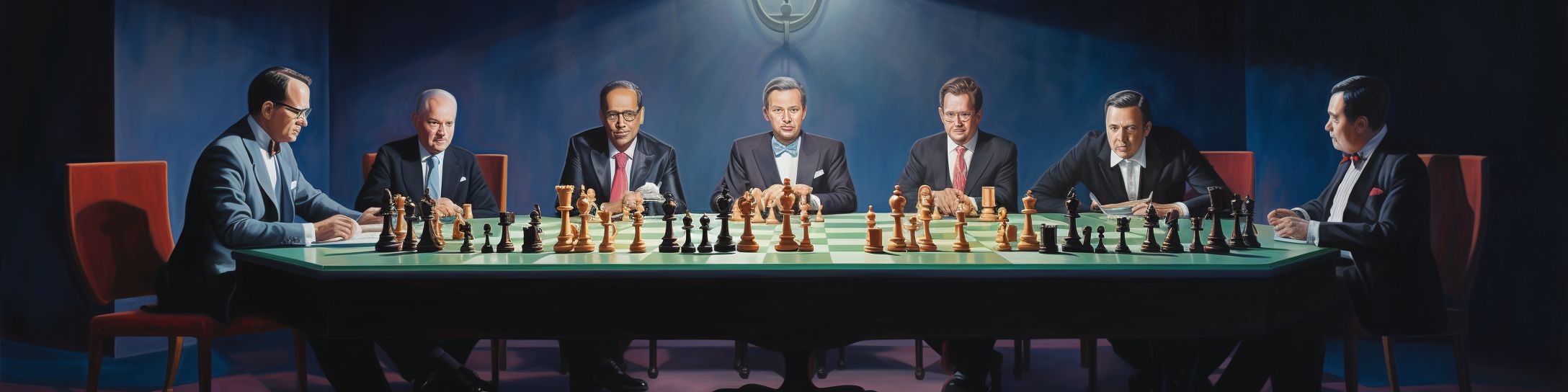
Spanning time and continents, the title of World Chess Champion has been the guiding light for countless aspiring masters of the game. Throughout the ages, certain names have become etched in history, elevated to the status of legends for their significant contributions to chess.
Wilhelm Steinitz: The Pioneer
It would be impossible to discuss world champions without mentioning Wilhelm Steinitz . A native of Prague, Steinitz became the first officially recognized world chess champion in 1886. His revolutionary vision of the game, focused on methodical organization and structure rather than audacious attack, laid the foundations of modern positional play.
Alekhine, Euwe, Bogoljubov: The Transition Era
The period following the Steinitz era saw the reign of masters like Aleksandr Alekhine, Max Euwe, and Efim Bogoljubov. These chess geniuses all made their unique contributions, from Alekhine's offensive creativity to Euwe's more conservative approach.
Soviet Legends
In the 1940s and until the end of the 20th century, Russia became the cradle of world champions, with legendary figures such as Mikhail Botvinnik, Anatoly Karpov and arguably the most famous chess champion of all time, Garry Kasparov, who reigned for almost 15 years.
Viswanathan Anand: An Exotic Breath
In 2007, Viswanathan Anand of India became one of the few world champions from outside Eastern Europe. Anand, also known as "The Tiger of Madras," is renowned for his astonishing speed and ability to adapt to almost any situation.
Magnus Carlsen: The Reigning Champion
In the modern era, Norway has produced a prodigy named Magnus Carlsen. Since 2013, Carlsen has held the title of world chess champion, impressing with his ability to find resources in positions that others consider useless or even lost.
From Steinitz to Carlsen, these world chess champions have all left an indelible mark on the game, transforming our understanding of chess and raising the bar for future aspiring champions.
The Influence of Cinema and Television Series on the Emergence of Chess Prodigies
Instead of being confined to the chessboard, the world of chess has recently found a new playing field: film and television. This fusion of entertainment and chess has not only succeeded in making this ancient game more accessible, but has also helped it take the world of pop culture by storm, giving rise to a new generation of famous chess players.
Cinema: A New Territory for Chess
Cinema has always loved strategies, and what better way to illustrate intellectual conflict than through chess? Numerous films have featured chess, whether through metaphorical use or by depicting intense chess tournaments . These works have greatly contributed to presenting the game in a new light, and some fictional characters have even become icons in the chess world.
Television Series: Failures in Everyone's Living Room
The small screen has also embraced chess. Modern television series have integrated the game into their narratives in innovative ways. Today, many series characters are recognized as true chess stars, some even surpassing real-life figures in the game's popularity.
Notable Influences: From Fiction to Reality
The impact of popular culture has been so significant that today we are witnessing a genuine resurgence of interest in chess. Many enthusiasts are inspired by these portrayals and aspire to become top-level chess players themselves, proving once again the undeniable influence of film and television on the creation of new chess stars.
Women Who Have Made Their Mark on the World of Chess
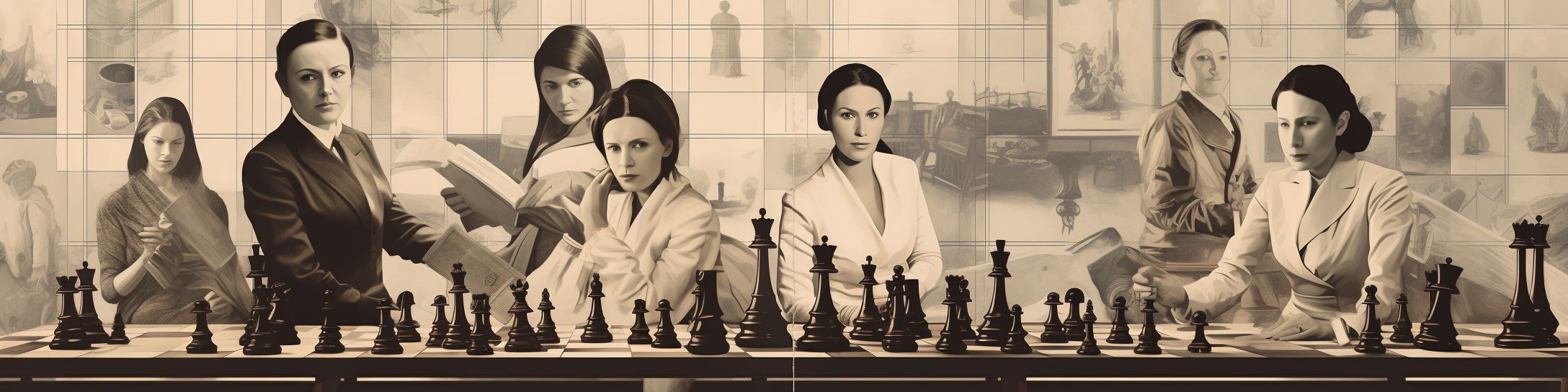
In the heart of the male-dominated chess arena, queens emerged, inscribing their names in chess history. These inspiring women defied stereotypes, fought against prejudice, and became iconic figures on the chessboard.
Judith Polgar: the chess prodigy
One cannot talk about women's chess without mentioning the Hungarian prodigy Judith Polgar. Proclaimed International Grandmaster at the age of 15, she challenged renowned male opponents, making history with her dynamic presence and determined strategy.
Vera Menchik: the chess pioneer
Vera Menchik's achievements laid the foundation for the Women's World Chess Championship . In 1927, she became the first women's world champion, a title she defended six times. Her perseverance and dedication to the game set the tone for future generations of female chess players.
Hou Yifan and His Rise to the Chess Elite
Hou Yifan, the Chinese chess sensation, has revolutionized the world of women's chess. At 16, she became the youngest-ever women's world champion. Hou Yifan continues to break down barriers, making her mark not only in women's chess but also in men's chess, where she has competed on several occasions.
Women chess players of today and tomorrow
The future of women's chess is bright, with talented players continuing to redefine the game. Women like Russian international grandmaster Alexandra Kosteniuk and Indian prodigy Harika Dronavalli represent the diversity and breadth of female talent in chess.
Famous women chess players have come a long way, indelibly shaping and inspiring the world of chess. Their influence lives on and continues to reshape the game, demonstrating that the chessboard is not just a playground for men, but a stage shared by all those with the tactical skill and passion for this ancient game.
But how exactly have women influenced and transformed the chess landscape? What barriers have they had to overcome, and how have they reshaped our understanding and appreciation of the game? For an in-depth exploration of these questions and an immersion into the rich legacy left by female players, we invite you to read our detailed article on The Influence of Women in the World of Chess . Delve into the inspiring journey of the women who have left their mark on this field at every turn.
The Legacy of Great Players for Future Generations
The aura of famous chess players transcends eras and continually inspires new generations of players. Their chess feats are a source of motivation, their strategies become invaluable lessons for improving one's tactics, and their dedication to the game illustrates the discipline necessary to master this ancient art. Several key factors help us understand this enduring influence.
Chess, a mind sport accessible to all
Chess is a universal game; it knows no borders or generational gaps. The fame of chess players illustrates this universality. Whether young or old, from a humble or privileged background, everyone has the opportunity to become the architect of their own chess destiny, like these famous chess players.
The Role of Media and Popular Culture
Famous chess players are often featured in the media and popular culture, helping to renew enthusiasm for the game. Films like "The Queen's Gambit" or documentaries about the legendary duel between Kasparov and Deep Blue, along with media coverage of the World Chess Championships, all contribute to maintaining this enthusiasm and stimulating the interest of new generations in chess.
The Transmission of Passion and Knowledge
Ultimately, the true essence of the connection between famous chess players and new generations lies in the transmission of their knowledge and passion for the game. Chess books, annotated games, online courses, workshops, and chess clubs are all ways for players of all ages to learn from masters of the past and present. It is here that new generations find the inspiration to follow in the footsteps of these chess giants and perhaps, one day, become true legends of the game themselves.
The Mindset of Chess Giants
Beyond mental agility and strategy, psychology plays a crucial role in chess. Famous chess players have all demonstrated exceptional psychological skills that have contributed to their success.
Patience: An Essential Asset
In the silent world of chess, patience is paramount. In each game, hours can pass before an advantage emerges. Great players know how to wait for the right moment to make the decisive move that will secure their victory. They possess the ability to remain calm and focused, despite the tension and the stakes.
Resilience and Determination
Losing a game is not the end of the world, but an opportunity to learn and improve. Chess demands strong resilience and an unwavering will to win. These traits are frequently seen in legends like Garry Kasparov and Magnus Carlsen, both of whom demonstrated a remarkable ability to bounce back from defeats.
Prediction and Anticipation
The most accomplished chess players possess an extraordinary ability to anticipate. They are able to predict their opponents' moves several steps ahead and adjust their strategy accordingly. This demonstrates impressive intelligence and analytical skills.
Emotional Control
Finally, controlling one's emotions is another key to success in chess. Exceptional players demonstrate great mental strength, avoiding letting their feelings interfere with their game. They know how to conceal their intentions and maintain their composure even in times of crisis.
In conclusion, excellence in chess is not simply a matter of perfect mastery of the rules and strategies of the game. It also involves remarkable psychological skills that distinguish famous chess players from the average person. These mental faculties, such as patience, resilience, anticipation, and emotional control, are all keys that pave the way to success in this ancient game.