

The influence of women in chess
of reading
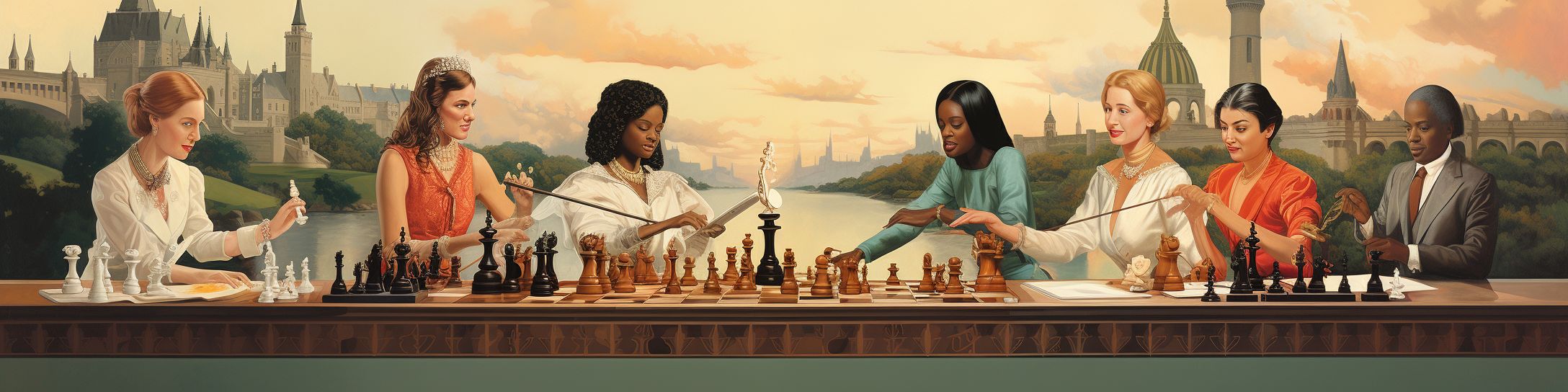
The history of queens in chess
The world of chess has historically been dominated by men, but this hasn't stopped women from making their mark and excelling in this strategic game. Over time, women have not only risen to the challenge but have also repeatedly pushed the boundaries by improving the quality of the game and introducing new strategies.
The dominant role of women in chess
It is also important to mention the prominent role of women in chess across different cultures. In some ancient cultures, such as the civilizations of medieval India, there was a form of chess called Chaturanga, where women played a key role. They were not only spectators but also active participants, demonstrating their influence on chess even at that time.
Women chess champions
Over the years, numerous world chess titles have been won by women. Great players such as Judit Polgar, often cited as one of the greatest female chess players of all time, have made history. Polgar was the first woman to successfully challenge male dominance in the sport and defeat several male world champions.
The influence of women on modern gaming
Today, thanks to the influence of players like Polgar and others, the world of chess continues to change. Women are having an increasingly strong impact on the game, with mixed tournaments where they compete with men and prove that chess is not just a man's game.
Conclusion
There is no denying that the influence of women in the world of chess has undergone a remarkable evolution. Their contribution to the game goes beyond mere participation. They have not only brought new perspectives but have also broken stereotypes and paved the way for the next generation of female chess players.
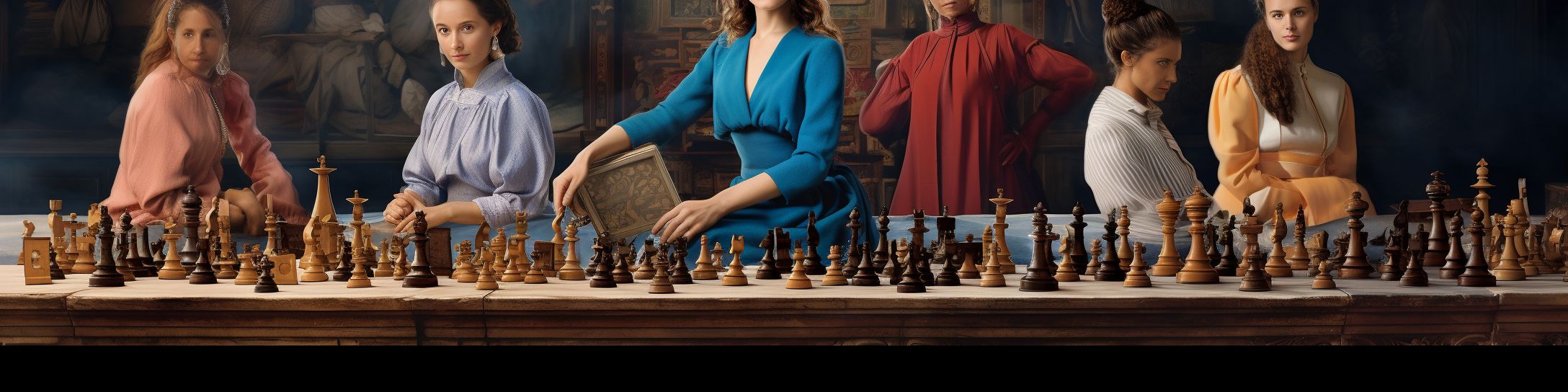
The most renowned female chess champions
In the pursuit of gender equality in the world of chess, several women have made history through their exceptional performances and significant contributions. They paved the way for a new generation of female chess players and proved that strength in the game is not a matter of gender, but of talent, mental training, and perseverance.
Judit Polgar: The chess prodigy
Considered the greatest female chess player of all time, Judit Polgar revolutionized the traditional male-dominated image of chess. Setting numerous records throughout her career, she is best known for defeating world champions of the caliber of Garry Kasparov and Anatoly Karpov.
Hou Yifan: The Chinese Queen of Chess
Chess in China has also seen the emergence of an exceptional player, Hou Yifan. By becoming the youngest women's world chess champion at the age of 16, she put China on the international chess scene.
Other influential contributors
Many other female players have left their mark on the history of chess. Among them, we can mention Vera Menchik, the first woman to compete with men at the highest levels, and Maia Chiburdanidze, who won the Women's World Chess Championship at the age of 17, a record unmatched until the arrival of Hou Yifan.
In conclusion, the presence and influence of these remarkable women in the world of chess have helped to establish gender parity and encourage more women to join the ranks of enthusiasts of this intellectual game.
To learn more about famous female chess players, feel free to consult our article GREAT FEMALE CHESS PLAYERS which brings together all the profiles and stories of the most influential female players in the world of chess.

The importance of women in the expansion of chess
Alongside the kings of the chessboard, queens have definitively carved their place in the history of chess. Their influence is not only visible on the chessboard, but also extends to the fields of education, diversification, and the democratization of this revered game.
A new canvas for chess education
The rise of women in the world of chess has breathed new life into the game, particularly in the field of education. Female figures in the chess world, such as Judit Polgar, the strongest player in history, have helped to transcend the traditional image of chess and make it accessible to a much wider audience. Women have thus shaped a new pedagogy dedicated to chess and contributed to the spread of interest in the game throughout the world.
Diversification of the chess community
Thanks to the increasing involvement of women, the chess community has become more diverse and inclusive. This diversification has not only contributed to strengthening the appeal of chess, but has also fostered the development of new strategies and approached chess from different perspectives, further enriching the world of this strategy game.
A major contribution to the democratization of chess.
By striving to conquer the chessboard, women have also played a key role in democratizing chess. Their ambition and determination have helped to dismantle the gender stereotypes surrounding chess, making the game more accessible to everyone, regardless of sex. In other words, women have made a significant contribution to the popularity and expansion of chess in the 21st century.

The challenges facing women in chess
Despite significant progress in terms of female representation and performance in the world of chess, women still face a number of challenges to distinguish themselves in this field which has long been monopolized by men.
The gender stereotype
It's not just the tangible obstacles women face, but also the often subtly present gender stereotypes. Prejudices persist, suggesting that chess is a "masculine" game requiring logic and strategy traditionally attributed to men. Significant work remains to be done to dismantle these preconceived notions and promote a more egalitarian vision of chess.
Inequalities in training and support
In terms of training, it appears that women have less access to high-level coaching opportunities or participation in major competitions. Even today, efforts are needed to offer equal opportunities to all players, regardless of their gender.
The diversity of tournaments
One of the unique aspects of the chess world is the separation of men's and women's competitions. This separation can limit the development of women's chess. By promoting women's participation in mixed tournaments, chess could become a key example for gender equality in intellectual sports.
In conclusion, the path to equality in the world of chess has only recently been laid, and many challenges remain. However, the growing influence of women in this field is undeniable and promises a competitive and diverse future for the game of chess.

The evolution of women's freedoms in the world of chess
Over the past few decades, the world of chess has undergone a significant transformation with a gradual increase in the influence of women in this field. Despite the challenges, they have managed to break down barriers and give a new dimension to this strategic game.
The emergence of women in competitions
Once overlooked, women have now earned their rightful place in chess competitions. Several tournaments exclusively for women have been established, thus showcasing their talent and promoting gender equality in the sport.
The importance of women in organizations
Beyond competitions, women have also reached the highest levels of chess organizations, contributing to more balanced decision-making and greater recognition of women's role in this field. Their active participation has led to the establishment of new rules that promote women's empowerment in the world of chess.
The fight for gender equality continues
Despite the progress made so far, the fight for gender equality in the world of chess is far from over. Many challenges remain, particularly regarding equal opportunities, representation at all levels, and combating stereotypes. Only by continuing to promote the importance of women in this field can we truly make a difference.

The influence of queens on chess tactics
In addition to their historical achievements and the inspiration they provide, women have also influenced the world of chess in a more subtle but equally significant way: through the tactics and strategies used on the board.
The opening of women before the chessboard
When discussing chess strategies, it's impossible to ignore the Queen's Opening . Although not explicitly a strategy devised by female players, its name pays homage to the strength and influence of women in chess. It's a series of popular opening moves that emphasize rapid control of the center of the board and king safety. It demonstrates how women have changed not only the perception of the game but also how it's played.
Women and changing styles
Historically, chess has long been associated with an aggressive and direct style. However, many prominent female players have championed a more subtle and strategic approach. By employing moves that might appear more defensive or conservative, they have successfully implemented unorthodox tactics that have caught their opponents off guard. This challenges the preconceived notion that aggression is the key to success in chess. Women's contributions to chess thus extend beyond their personal victories; they have helped broaden the horizons of the game itself.
Resilience on the chessboard
Another element that women have highlighted is the power of resilience on the chessboard. Facing often more numerous opponents and entrenched traditions, they have persisted and demonstrated that determination is just as important as pure strategy. This ability to persevere has influenced how many other players approach the game, showing that even in the face of adversity, victory is possible with patience and determination.

Women participating in international chess tournaments
Facing a chessboard in one of the many international competitions, women demonstrate day after day that they are a significant force in the world of chess. Their prominent presence in international chess tournaments continues to show that the game is no longer limited to men.
Women in the World Chess Championship
Established in 1927 by FIDE (International Chess Federation), the first Women's World Chess Championship marked a milestone in the involvement of women in international chess tournaments. This event opened a new chapter, allowing women to shine on equal footing with their male counterparts, thus demonstrating their chess expertise.
Increase in the percentage of women in tournaments
Over time, the number of women participating in chess tournaments has increased significantly. Their presence on the international stage has greatly contributed to the advancement and evolution of this mental sport. The percentage of women participating in these tournaments is solid evidence of the dynamism and competitive spirit that drives the women's chess community.
Their influence on overall game strategies
The active participation of women in tournaments has not only broken down gender stereotypes but has also positively impacted overall game strategies. Their innovative approaches and subtle strategic thinking have brought new dimensions to the game, enriching the world of chess with unique and thoughtful perspectives. Thus, overall game strategies have been significantly influenced by women chess players.
The women included in the FIDE list
Today, many women feature on the FIDE list of top chess players. This is irrefutable proof of the importance and influence of women in international chess tournaments and in the chess world in general.

Advocating for greater equality in the world of chess
By reconciling challenges and successes, a new area of debate has emerged in the chess arena: gender parity. In recent years, a growing number of voices have been raised to question the gender balance in this field and to seek to promote more equitable participation.
Parity still at stake
The ratio of male to female participants in chess tournaments at all levels, from local to global, remains skewed in favor of men. This clearly underscores that gender parity in the world of chess remains a significant challenge.
The commitment of institutions
Faced with this challenge, chess institutions are now taking steps to strengthen gender balance. Initiatives such as all-female competitions, training for female chess players at all levels, and mentorship programs aim to encourage more women to join this exciting world.
Female players as role models
Women who have distinguished themselves in the world of chess also play a crucial role in inspiring other women and girls to follow in their footsteps. They refute gender stereotypes by proving that chess is not a field reserved for men.
Achieving true parity in the world of chess requires sustained effort, collective awareness, and a willingness to move beyond gender stereotypes. With time and determination, genuine parity in the chess world is not just a possibility, but a reality in the making.

Prominent female figures in chess teaching
Beyond tournament participation, another area in which women have made significant contributions to the world of chess is teaching. They have been able to transmit their passion for this ancient and meticulously crafted game, while developing a new generation of skilled chess players.
Chess education for children
It is well known that chess can greatly contribute to children's cognitive development. Many women, as teachers and trainers, have played a crucial role in introducing children to the game of chess and have thus contributed to their overall development.
Women in chess schools and organizations
Several women have also founded or presided over chess schools and organizations dedicated to teaching and promoting the game. Their work has made chess more accessible to everyone.
The role of women in pedagogical innovation in chess
By focusing on innovative teaching strategies, women have succeeded in taking chess education to the next level. They have spearheaded initiatives to integrate technology into chess learning, making the game more interactive and engaging for students of all ages.
Women have proven to be an indispensable pillar in chess education, paving the way for generations of enlightened and passionate players.

The future of women in the world of chess.
As the chess landscape continues to evolve, the challenge is to predict the role that women will play in the future of this noble game.
Increased participation of women in chess
With the continued progress of women's freedoms and representation, even greater participation of women in the world of chess is expected. Tournament organizers worldwide are now taking initiatives to encourage girls and women to actively participate in chess competitions.
Women leaders in chess federations
It is also expected that more and more women will access leadership positions within chess federations. These influential positions will allow women to contribute constructively to the development of chess, especially in promoting diversity and gender equality within the sport.
The development of educational initiatives
Finally, given the growing importance of women in teaching chess at all levels, we expect to see more women-specific educational initiatives in the coming years. These programs will aim not only to promote chess among women and girls, but also to provide training and support opportunities for those with professional aspirations in the world of chess.
In short, the future of women in the world of chess is bright, promising and enriching for the game itself.
As we celebrate the impact and contributions of women to the world of chess, it's essential to recognize that their influence is part of a broader panorama of legends and prodigies of the game. From historical masters to today's emerging talents, the chessboard has been the stage for countless inspiring stories. For a more comprehensive perspective on these icons, of both sexes, who have shaped the world of chess, we invite you to explore our in-depth article on FAMOUS CHESS PLAYERS: FROM CHESSBOARD LEGENDS TO MODERN STARS .