

Chess competitions
of reading

History of chess competitions
Chess competitions have a long and fascinating history dating back several centuries. This strategy game has evolved over time, but its competitive nature and its role in intellectual development remain undeniable.
Origins of chess competitions
The earliest known chess competitions date back to the medieval period. Tournaments were organized between European kings and nobles to test their strategy and intellectual agility. However, the game as we know it today, with its standardized rules, began to take shape in the 15th century.
Development through the ages
The growing popularity of the game over the centuries led to the organization of more structured competitions. In the 19th century, international tournaments began to be held, attracting players from all over the world. In 1886, the first World Chess Championship took place, marking a significant milestone in the history of chess competitions.
Modern chess and chess competitions
Today, chess competitions are recognized and respected worldwide. They are governed by the International Chess Federation (FIDE), which maintains a rating system and organizes the World Chess Championship. Online chess competitions have also gained popularity due to their ease of access and the possibility of global competition.
Impact of chess competitions
Chess competitions are not only tests of strategy and skill, but they also play an important role in developing critical thinking and problem-solving abilities. They provide a platform for teaching and learning the intricacies of the game, while promoting mutual respect and sportsmanship among competitors.

Fundamental rules of chess competitions
Immerse yourself in the rich and complex world of chess competitions, where strategy, concentration, and mastery of the rules intertwine. In this context, the competition rules established by the International Chess Federation (FIDE) apply.
The standard course of a match
A chess match is divided into several phases. Initially, a handshake between the two competitors marks the beginning of the duel. The player with the white pieces attacks first. Various tactical decisions are made during the game, the ultimate goal of which is to checkmate the opponent.
Time control
Timekeeping is a crucial element in chess competitions. Each player has a limited amount of time to make their moves. If a player runs out of time before the game is over, they are declared the loser, unless their opponent can technically deliver checkmate, in which case the game ends in a draw.
Respect for the opponent and the game
Respect for the opponent and the game is a fundamental aspect of chess competitions. Distractions and disruptions are strictly prohibited. Players are not allowed to leave the playing area without the arbiter's permission, and any form of cheating, including the use of electronic aids, is severely punished.
Use of notations
In chess competitions, players are often required to record their moves using a chess notation system. This allows the arbiter to resolve any disputes that may arise and any observer to follow the progress of the game.

Profile of a competitive chess player
In the chess arena, those who manage to impose their game are above all endowed with exceptional skills and qualities.
Mental endurance
Being a competitive chess player requires much more than simply understanding the rules of the game. It demands incredible mental stamina, the ability to maintain optimal concentration for several hours while analyzing and developing multiple strategies.
Self-esteem
Self-esteem is also crucial in the competitive world of chess. Whether you win or lose, it's essential to learn from every game and maintain confidence in your abilities as a player. You also need consistent motivation to improve your game, which requires strong willpower and self-discipline.
Physical preparation
Physical preparation is another crucial element of a competitive chess player's profile. Although chess does not require the same physical intensity as other sports, good physical health contributes significantly to a player's ability to concentrate and remain alert during long competitions.
Cognitive flexibility
Finally, cognitive flexibility—the ability to think creatively and flexibly—is essential for success in chess. Chess is a game of strategy, and the ability to quickly adapt to an opponent's moves and change strategy when necessary can make the difference between victory and defeat.

Types of chess tournaments
Let's now explore the various forms of chess competition that appeal to enthusiasts around the world. Whether driven by strategic choices or simply the love of the game, each form of competition offers its own share of excitement and adventure.
Single-elimination tournaments
This form of competition, as its name suggests, eliminates any participant who loses a match. These tournaments are often intense, dramatic, and captivating, as each match could potentially be a player's last. A well-known example of this type of competition is the Chess World Cup.
Round-robin tournaments
In these tournaments, each player must face all the other participants, sometimes more than once. This format allows for a fairer assessment of players' skills, as it minimizes the impact of luck and maximizes the importance of consistency. The World Chess Championship often uses this format.
Team tournaments
Here, players team up and their scores are combined to determine the tournament winner. This form of competition highlights not only individual skill but also the players' ability to work as a team. The Chess Olympiad is one of the most prestigious team competitions.
Online tournaments
With the rise of technology and the growing popularity of online chess, tournaments began to be organized virtually. These competitions allowed more people to participate and paved the way for exciting new ways to play chess.
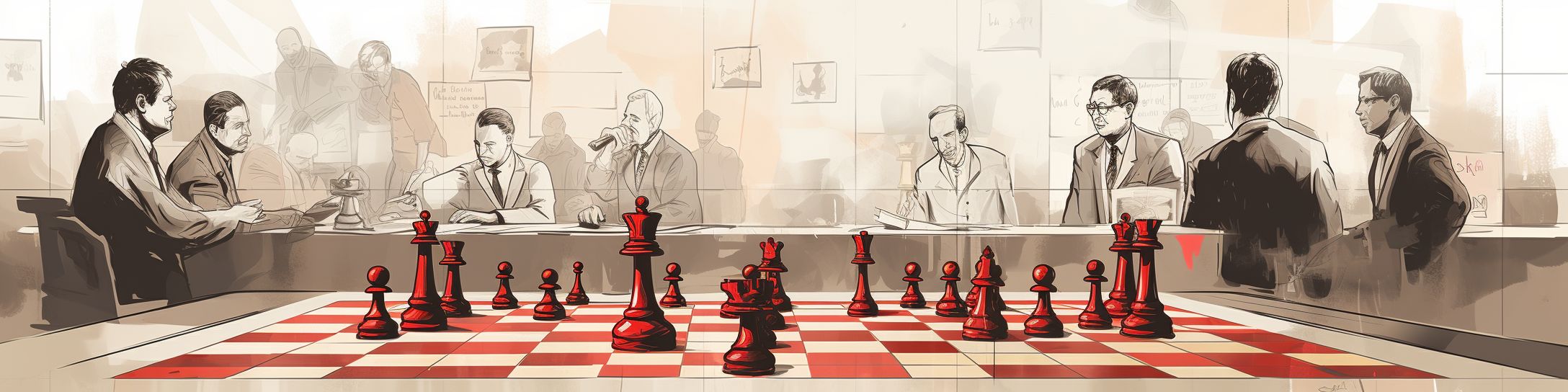
Scoring methods in chess competitions
Decoding the workings of notation in chess competitions may seem like a challenge, but it is actually an essential component that adds a new dimension to this admirably complex game.
Introduction to notation
In competitive chess, each player must record every move made during the game. This notation serves two main purposes. First, it allows for post-game analysis to draw lessons from the game. Second, in case of a dispute during the game, the record sheet serves as a reference and can be used to restore the correct position of the pieces on the board.
Algebraic notation
The most commonly used method today is algebraic notation . Each square on the chessboard is designated by a letter (from a to h for the columns) and a number (from 1 to 8 for the rows). For example, the initial move of the pawn from e2 to e4 is written e4.
Descriptive notation
Less common today but historically used, descriptive notation involves describing the movement of the piece. For example, the previous move would be noted "Pawn advances two squares".
Numerical notation
Another approach is numerical notation , similar to algebraic notation but where each square is identified by two numbers corresponding respectively to its column and row. Therefore, the initial move of the piece would be written as 5254.
In conclusion
Understanding chess notation requires not only memorizing the system used but also grasping the underlying logic. This is essential for deepening one's mastery of chess, especially when it comes to participating in competitions.

Iconic venues for chess competitions
Traveling around the globe, we will now explore the hotspots of chess competitions, prestigious venues that have hosted and continue to host the greatest duels on the chessboard.
The games room of the Manhattan Chess Club
Historic and prestigious, the Manhattan Chess Club 's playing room is an iconic venue that has hosted many chess grandmasters, right in the heart of New York City. It continues to be a benchmark for chess players worldwide.
The Central Chess Club in Moscow
The Central Chess Club in Moscow is one of the world's most important chess centers. Founded in 1935, it was the cradle of the Russian school of chess and has produced numerous champions. Its international reputation and influence make it a key location in the chess world.
The Marshall Chess Club of New York
Another pillar of the chess world, the Marshall Chess Club in New York has been the scene of epic competitions since its founding in 1915. It has hosted games by grandmasters such as Capablanca and remains a favorite spot for all chess enthusiasts.
The Hastings Chess Club in the United Kingdom
Finally, the Hastings Chess Club in the United Kingdom holds a special place among the iconic venues of chess competitions. It is famous for hosting the oldest chess tournament in the world, renowned for attracting the most talented chess players for over a century.

The biggest international chess competitions
From the dynamism of the local competitive scene, we now turn to the world of elite chess. Determined competitors from all continents come to challenge each other in a series of tournaments held on the international stage.
The World Chess Championship
The highlight of the year for any chess enthusiast is undoubtedly the World Chess Championship . Organized by the International Chess Federation (FIDE), it is the tournament that crowns the world champion of this ancient discipline, and which sees the brightest minds in the game compete for the ultimate title.
The Chess Olympiad
Right after the World Championship, the Chess Olympiad is the most prestigious competition in the sport. This biennial competition brings together national teams from all over the world and is often considered the Team World Cup of chess.
Chess World Cup
The Chess World Cup is another notable event on the chess competition calendar. Organized by FIDE, this competition attracts many of the world's best players and takes place over several weeks with games played in a knockout format.
The Sinquefield Cup
Paying homage to the vibrant chess scene in the United States, the Sinquefield Cup is one of the world's most prestigious tournaments. Held at the renowned Chess Club and Scholastic Center in St. Louis, it attracts the world's best chess players.
The Tata Steel Chess Tournament
Known for its history and the quality of its participants, the Tata Steel Chess competition is a benchmark among international chess tournaments. With a tradition spanning over 80 years, the tournament attracts the best chess players in the world.
In short, international chess competitions are a true arena for intellectual prowess, brilliant strategies, and passionate competition. These tournaments not only crown champions but also help maintain the game of chess at the forefront of global popularity.

Common strategies in chess competitions
In the captivating world of chess, competitions highlight a range of strategies employed by players to dominate their opponent.
The opening strategy
At the beginning of the game, one of the key elements of an effective strategy is to make a series of initial moves, known as openings . These allow players to establish control over the center of the board, move their pieces into optimal positions, and ultimately deliver checkmate.
The mid-game strategy
Once the openings are complete, the player must then move on to the middlegame . This is when most of the tactical battles take place. Common strategies include attacking the opponent's king, creating combinations of pieces, and preparing the board for the endgame.
Endgame strategy
Towards the end of the game , when only a few pieces remain on the board, the strategy changes significantly. Players often focus on advancing their pawns to obtain a new queen, while keeping their king safe.
Whether the participants are amateurs or professionals, chess competitions are always a complex dance of expertly orchestrated strategies.

How to prepare for a chess competition
Are you considering entering the world of competitive chess? Adjust your crown, because you are about to embark on an adventure marked by adrenaline, strategy, and intellectual challenge.
Understanding the rules and regulations
Effective preparation for a chess competition begins with a thorough understanding of the rules and regulations of the game. Take the time to study the rules and familiarize yourself with the different phases and techniques specific to each phase.
Mastering the openings
A good opening can set the tone for the rest of the game. Research various openings and practice those that best suit your playing style.
Improve your physical condition
Having good mental stamina is crucial for staying focused during the long hours of a chess game. Good physical condition can also help improve mental stamina.
Allow time for analysis
Spend time analyzing past games , identifying your strengths and working on areas for improvement. Use chess analysis software to get detailed information about your games.
Participate in friendly games
Practice as much as possible by playing friendly games with different opponents. This will help you develop a variety of skills, deal with different strategies, and gain experience in managing time and stress during a game.
Finally, remember that the most important thing is to enjoy the game. Good luck in your upcoming chess competitions!

The impact of technology on chess competitions
Between tradition and innovation, modern chess competitions are reinventing themselves thanks to the growing influence of technology. This is a decisive turning point that is changing not only how the game is played but also how it is perceived around the world.
Powerful analytical tools
The digital age has given rise to incredibly powerful online chess analysis tools. These tools allow players to study their games, dissect their mistakes, and adapt their strategy accordingly. A true revolution that has raised the level of play in chess competitions.
Online chess competitions
Digital technology has also transformed how chess competitions are organized. Today, online tournaments allow players to challenge opponents from around the world without leaving the comfort of their homes. This significant advantage has democratized this ancient game for a wider audience.
Live broadcasts of the competitions
Thanks to streaming technology, the various phases of chess competitions are now broadcast in real time on the internet. Combined with live expert analysis, this innovation amplifies the suspense and excitement surrounding these events, making the experience more enriching for viewers.

Women in chess competitions
Shift focus and delve into an often-overlooked perspective of chess competitions: the role and impact of women. Despite unique challenges and historical obstacles, women have managed to leave an undeniable mark and shape the future of the competitive chess world.
Famous women in the history of chess competitions
The presence of women in chess is not new, although it is often less publicized. Prominent figures such as Vera Menchik, the first women's world chess champion, or Judit Polgar, considered the greatest female chess player of all time, have greatly contributed to shaping the history of chess competitions and continue to inspire future generations.
Women's and mixed competitions: a battleground for equality
Chess competitions offer a unique platform for addressing gender equality. Women's competitions showcase the talent of female players worldwide, while mixed competitions promote the idea that chess is gender-neutral and based solely on merit and skill.
The future of women in chess competitions
Despite the progress made, there is still a long way to go to achieve true equality in chess. By encouraging women's involvement at all levels, from local chess clubs to top-level international competitions, we can hope for a future where women are no longer exceptions, but an integral part of the competitive chess landscape.
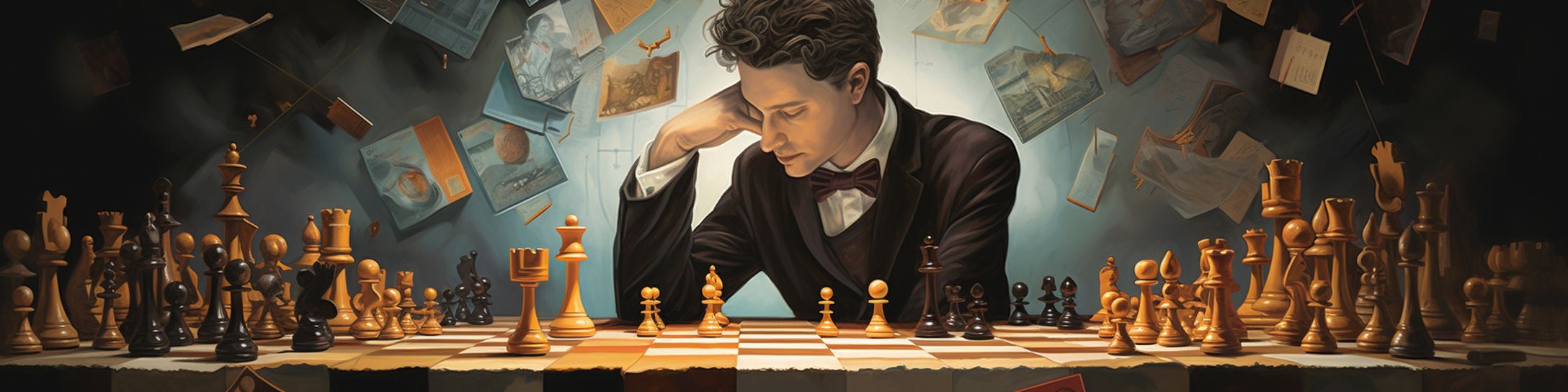
The role of psychology in chess competitions
Beyond strategy and mastery of the rules, we will now delve into the sometimes neglected aspect of chess competitions: the role played by psychology.
Concentration and stress management
Chess is a game of the mind and, as such, demands intense and sustained concentration. Under the spotlight, players must be able to maintain their composure, regardless of the stress or pressure inherent in competition. Stress management is therefore a key skill for any competitive chess player.
The mental aspect of strategy
A crucial element of any chess game is the ability to anticipate the opponent's moves, a task that demands deep strategic thinking. A chess player must be able to read their opponent, analyze their thought patterns, and predict their moves several steps ahead.
Internal competition
Like any other sporting competition, chess also involves a confrontation with oneself. The player must learn to fight their own fears and doubts, to manage their emotions effectively throughout the game, and to overcome the psychological challenges of competition.